🎙️Transcript: Sales Secrets from the Top 1%
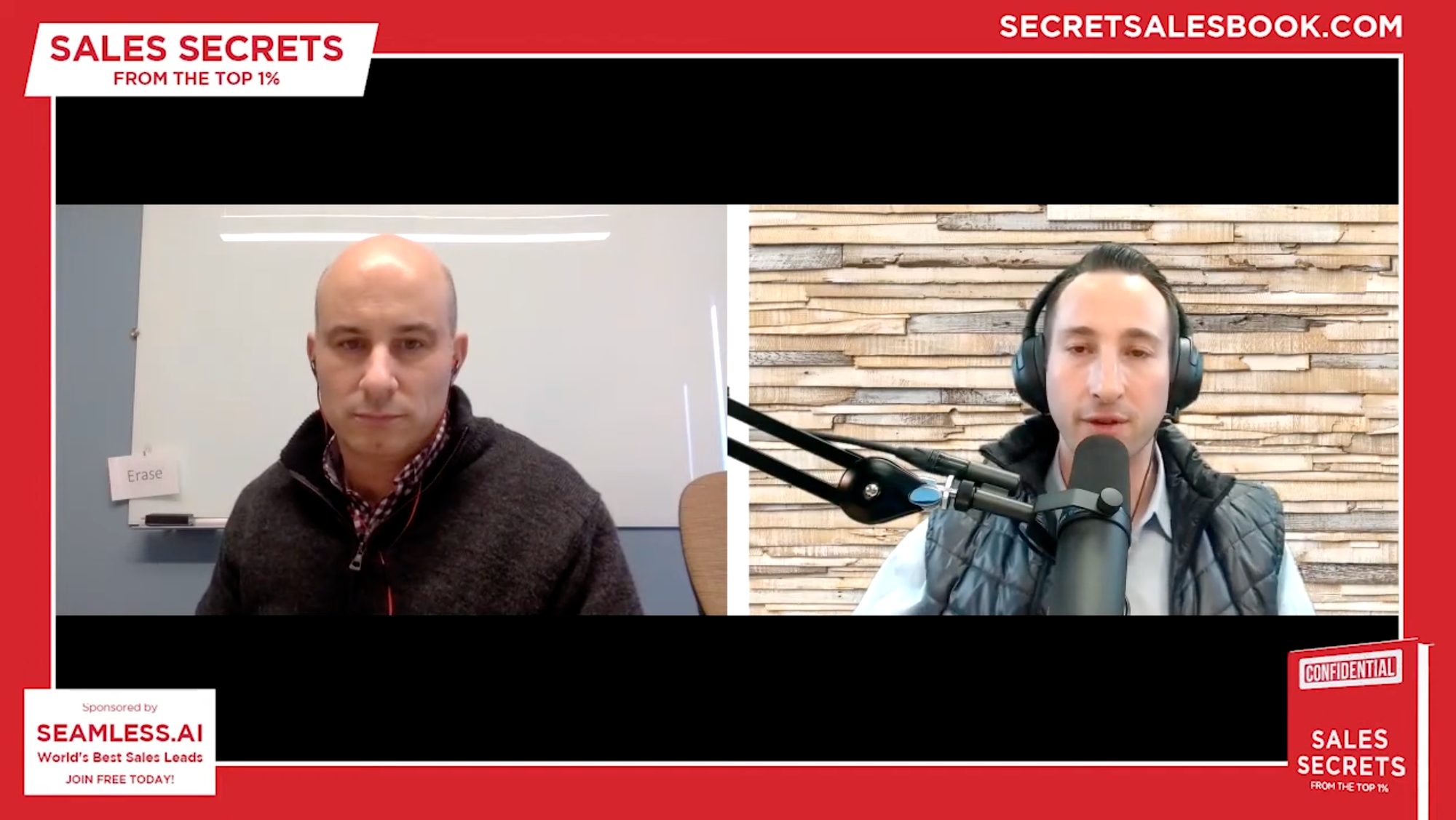
Sales Secrets from the Top 1%
"Sales Success Starts with the Right Attitude"
Brandon Bornancin, Ralph Barsi
December 16, 2019
Summary
In this intimate and revealing conversation, Ralph Barsi shares his 25-year journey through the sales profession—from delivering newspapers and collecting checks as a kid to leading a global sales development organization of nearly 200 people at ServiceNow.
Ralph's career trajectory is a masterclass in intentional growth, moving from individual contributor roles at UPS, CitySearch, and Ticketmaster to building and scaling SDR teams at companies like Elsevier, InsideView, and Achievers before landing at the publicly traded enterprise giant ServiceNow.
Throughout the conversation, Ralph emphasizes that his success has come not from being the smoothest talker or the most naturally gifted seller, but from genuinely caring about the craft, the people, and the mission of developing future sales leaders.
The heart of the discussion centers on Ralph's philosophy of chronicling and documenting every experience, learning as if he needs to teach it the next day, and maintaining what he calls "modeling roles" rather than having role models.
He shares candidly about his early terror of public speaking, his decision to take what seemed like a pay cut to move into leadership, and his intentional choice to experience working at a publicly traded company after years in startups.
Ralph's approach to leadership is refreshingly human—he spent an entire year just getting to know his 75 direct reports when he first joined ServiceNow, understanding where they grew up, what motivated them, and what they wanted to become.
This level of care and attention to the human element of sales has enabled him to scale teams dramatically while maintaining quality and culture.
The conversation culminates in Ralph's core sales secret: develop an attitude of gratitude.
This isn't a superficial platitude but a deeply held philosophy that runs through every aspect of his career—from learning from managers he didn't like, to being grateful for the failures and learning experiences, to recognizing that everyone he encounters brings gifts in different forms.
Ralph challenges listeners to stop thinking about themselves, adopt a beginner's mindset, and recognize that being grateful for what you have should inspire you to give back more to the ecosystem you work in.
His message is both philosophical and practical: your success in sales is directly tied to your ability to see the goodness in every experience and every person, even when it's difficult.
BIG Takeaways
• Chronicle Everything—Learn As If You're Teaching Tomorrow – Ralph's secret to continuous improvement was documenting every product he sold, every technique he used, and why they worked throughout his entire career.
His mentor at UPS told him early on to "chronicle it, document where you're at and how you got there, and study and learn as if you're going to have to teach someone the very next day."
This practice of keeping detailed notes on successes, failures, and learning experiences created a knowledge base that not only accelerated his own growth but became the foundation for his thought leadership.
When peers started asking "how do you do that?" he had documented answers ready to share. This habit of treating every experience as a teaching moment transformed him from practitioner to leader and eventually to one of the most sought-after speakers in sales development.
• Model Roles, Not Role Models—Nobody Is Perfect – Ralph shares a powerful reframing from Tony Robbins: "I don't believe in role models. I believe in modeling roles."
The distinction is critical—when you idolize someone and put them on a pedestal as a role model, you're devastated when they inevitably disappoint you or fall from grace.
But if you model specific roles and behaviors, you can pick and choose the best attributes from multiple people without being crushed by their flaws. If someone runs a killer meeting, model that role in your next meeting.
If someone is a wonderful partner to their spouse, model that role in your next interaction with your significant other.
This approach allows you to learn from both the managers you loved and the ones you didn't like, extracting value from every leadership style without becoming disillusioned when people reveal their imperfections.
• The Three-Year Rule for Making Real Impact – Ralph noticed he stayed at most companies for approximately three years, which he describes as the minimum time needed to truly make an impact and gain comprehensive experience.
He explains that one or two years is "a flash in the pan"—you don't go through enough cycles, don't see enough repetition, and don't experience the full range of hitting and missing numbers.
Three years allows you to establish deep relationships, see patterns emerge, experience the ups and downs of multiple quota cycles, and actually leave a mark on the organization.
This patience stands in stark contrast to the modern tendency to job-hop annually, and Ralph's career progression shows the compounding benefits of staying long enough to see your initiatives through to completion and really understand what worked and what didn't.
• Care Deeply—That's Half the Secret Sauce – When asked what makes him skilled at building and scaling SDR teams from small to large, Ralph's answer was disarmingly simple: "I don't know if I'm really good at it.
I think that I care. I care a lot about the craft and the role and the people and the teams and the art and the science behind it all.
I genuinely care, and I think that's half the battle." He explains that when you truly care, you naturally set up infrastructure, create frameworks and best practices, build nurturing environments, give frequent feedback, coach, develop, listen, and observe.
You become deeply in tune with your population. Ralph spent an entire year at ServiceNow just getting to know his 75 team members—where they grew up, what they studied, why they got into sales, what they want to become.
This depth of caring cannot be faked, and it creates the foundation for everything else in leadership. As Ralph puts it: "You've just got to give a shit, man."
• Face Your Fears by Doing Them Anyway—Leadership Requires Influence – Ralph admits he was "terrified" of public speaking when he first started and "hated it."
But he did it anyway because he understood that leadership includes influence, and influence requires the ability to inspire and motivate people by sharing experiences they can actually use.
Rather than waiting until he felt comfortable, he kept practicing, kept speaking, kept doing it "over and over and over again" until it became more comfortable and he developed his own style.
This principle applies broadly: don't wait until you're ready to step into leadership, don't wait until the fear subsides to take on new challenges. Do the thing that terrifies you repeatedly until you develop competence and eventually mastery.
Ralph's career is filled with moments of calculated discomfort—taking a pay cut to move into leadership, managing remote teams across continents, joining a massive publicly traded company after years at startups—all driven by his commitment to growth over comfort.
• Stop Thinking About Yourself—Develop a Beginner's Mindset – When Brandon posed the question of how an aggressive, competitive sales rep who thinks they know everything can develop an attitude of gratitude,
Ralph's answer was direct: "Stop thinking about yourself because everything you just said, it's all about you, man." He prescribes adopting a "beginner's mindset"—learning things as if you're required to teach them the next day, which forces you to open your eyes and ears, take better notes, and truly understand concepts before forming opinions.
Ralph also warns that "your belt will be tested"—as you progress in your career and grow teams, you'll always encounter haters and naysayers who aren't down with your approach or personality.
The practice is to look for what gift they're bringing to the table, even when it's tough to digest, especially when you have good intentions to help everyone. This outward focus and willingness to learn from critics is what separates good leaders from great ones.
• Develop an Attitude of Gratitude—Everyone Brings Gifts – Ralph's ultimate sales secret encompasses his entire philosophy: develop an attitude of gratitude.
This means being aware of the goodness you've picked up along the way and sharing those insights with others, leaving "a trail of breadcrumbs for people to learn from" that's crucial to the future of the sales profession.
It means finding value in every person you meet—from the people you don't like to the people you love and embrace—because they all bring gifts "in different shapes, sizes, colors, and forms."
Ralph challenges listeners to practice gratitude even for simple things like clean drinking water and high-quality technology, recognizing these as signs you should be giving back more to the ecosystem.
The attitude of gratitude isn't passive appreciation—it's an active practice of recognizing advantages, learning from every experience (including failures), extracting value from difficult people, and using that awareness to contribute more meaningfully to your profession and community.
When you stop competing with everyone and start seeing the special contribution each person makes, you unlock both personal growth and the ability to develop others.
Transcript
Brandon Bornancin (00:01):
Welcome to Sales Secrets From The Top 1%, where the world's best sales experts share their secrets to sales success. My name is Brandon Bornancin, a serial salesperson and entrepreneur, and I'm sitting down with the world's best sales experts to share their top secrets to sales success.
Brandon Bornancin (00:22):
Welcome to Sales Secrets From The Top 1%, where the world's best sales experts share their secrets to sales success. I am humbled, grateful, honored, and thrilled to have with me Mr. Barsi.
Ralph Barsi is the global sales development leader at ServiceNow. I've gone to 50 different sales events where this guy's on stage talking about the world's best sales development secret strategies and best practices. Prior to ServiceNow, he was vice president of field operations and sales development at Achievers. He was doing sales at InsideView.
Ralph, thank you so much for taking the time to join us today. Really appreciate you.
Ralph Barsi (01:03):
It's my pleasure, Brandon. How are you doing today?
Brandon Bornancin (01:05):
I'm doing great, man. I'm doing great now that we've finally got you locked in. This was two months of planning. This guy is so busy trying to hit his massive numbers. It was hard to lock Ralph in, but we're thrilled to have you today.
Ralph Barsi (01:20):
Happy to be here.
Brandon Bornancin (01:21):
The audience is dying to know a few things, man. You're everywhere in sales development. You're an expert. You're sharing all these strategies, tips, best practices. You're speaking all over the world.
I'd love to just take a step back for the audience—who is Ralph Barsi? Where did you come from? What's your background? Family? How did you get started in sales?
Ralph Barsi (01:42):
Wow. Whoa, that's a big one. Who am I? I'm Ralph Barsi. I am a father and a husband, probably first.
I married my college sweetheart close to 23 years ago.
Brandon Bornancin (01:58):
Oh, my gosh. Congrats, by the way.
Ralph Barsi (02:00):
Thank you.
Brandon Bornancin (02:02):
I'm engaged to my college sweetheart, so that's—
Ralph Barsi (02:03):
I love it. Congratulations to you.
Brandon Bornancin (02:04):
That's incredible.
Ralph Barsi (02:06):
I have three beautiful boys. One of them is already in college, and my youngest is going into high school in the fall next year.
So, with respect to sales, I feel like I've been in sales my whole life. I was that kid who had a paper route, and not only would I fold and stuff the bag full of newspapers and get on my BMX bike and truck through the neighborhood throwing papers, but I had to go collect checks from everybody every month for their newspaper subscription.
Brandon Bornancin (02:39):
So you were doing sales and accounts receivable.
Ralph Barsi (02:43):
Yeah, exactly. Yeah, totally.
Brandon Bornancin (02:45):
That's awesome.
Ralph Barsi (02:45):
So, I'm barking on my 25th year as a professional salesperson. I've had the pleasure of spending the first half of my career as an individual contributor. I have carried a bag. I have overseen territories. I've collected nice commission checks, et cetera.
But on the flip side, the latter half of my career has really been invested in building and scaling teams—both of individual contributors, but mostly of sales development reps, who are relatively early in their careers.
(03:20):
So, the whole craft of coaching and teaching and mentoring and developing and nurturing our future salespeople means a lot to me. I think, ultimately, the better they do in their careers, they're going to be representing you, Brandon. Everybody who's listening and watching us talk today, they're all in our beloved profession of sales.
We want gems going into our profession and representing us for generations to come, and I take that to heart. That's all. So, that's in a nutshell who I am and what my whole story with sales is about.
Brandon Bornancin (03:58):
Yeah. That's incredible. When you were doing the paper route and then obviously graduated from college with your college sweetheart, where was the first place professionally that you sold for?
Ralph Barsi (04:14):
Very first place I sold for professionally was United Parcel Service.
Brandon Bornancin (04:18):
UPS.
Ralph Barsi (04:18):
I worked for UPS for close to six years. Started out as a paid intern for them and learned all about logistics and supply chain management. I then moved into—
Brandon Bornancin (04:31):
Was your girlfriend, probably at the time, or maybe she was your wife, was she excited that you were going to work for United Parcel Service?
Ralph Barsi (04:38):
Absolutely. It's a great company. It is to this day.
Brandon Bornancin (04:41):
Yeah. Their training program, I heard, is amazing.
Ralph Barsi (04:43):
On fire. They've been buttoned up from the start. They have very high standards for their people, and especially for their leaders and managers. It was a real privilege to get onboarded, I guess, to sales from the folks at UPS.
I became an individual contributor there and was a key account executive and sold international services and freight services, freight forwarding services for them for several years. It really provided a great framework and foundation for me to launch my career from.
Brandon Bornancin (05:20):
Were you cold calling into B2B companies to manage all of their shipping needs or what was that like?
Ralph Barsi (05:26):
Absolutely. So, that cold calling was comprised of the green bar papers that we would have to print out on the major printer. We would have to draw a line through the numbers that we called with a little scribble scratch note of what the call included.
Then the second piece of the cold calling was literally going to the back doors where a lot of the logistics leaders worked, and going through the roll-up door and climbing up on the loading dock and beginning your pitch, starting to talk about the business issues that you're seeing in other like businesses in the neighborhood.
Brandon Bornancin (06:05):
So, it was like in-person pitching?
Ralph Barsi (06:07):
Oh, yeah. Absolutely.
Brandon Bornancin (06:08):
Oh, this wasn't like telesales. This was in-person cold calling.
Ralph Barsi (06:11):
It was full cycle. I had a quota. I had a bag to carry. I was generating my pipeline, pursuing it. I was pulling together the solutions, doing the contracts, and negotiating the deals, and getting paid. It was full cycle.
Brandon Bornancin (06:25):
That's awesome. That's awesome. You probably had a really nice car back then, man.
Ralph Barsi (06:31):
Well, actually no. Funny enough, no. I drove beat-up cars throughout my 20s, man, but I was happy about it.
Brandon Bornancin (06:40):
Really? That's good.
Ralph Barsi (06:41):
Yeah.
Brandon Bornancin (06:41):
You weren't like, "Yo, where's the Tesla? I'm crushing this number." Or you're like, "I'm still learning. I can have that later in my career. My goals are not around that."
Ralph Barsi (06:52):
Yeah, that part didn't matter at the time because it was '94, right? I graduated college. I'm working a professional job. I'm getting my own apartment soon. I'm enjoying the fruits of the Bay Area here.
There's so much to do, and quite frankly, I don't think I was that focused on money. I was just trying to not get fired, do good work, be of service to a lot of my customers that I was interacting with, and having fun. I was having a lot of fun.
Brandon Bornancin (07:26):
No, that's incredible. Then UPS let you go because you had an attitude of gratitude. I guess not the right attitude of gratitude. Where did you go after UPS?
Ralph Barsi (07:37):
No, no, no. I graduated from UPS. From there I went to CitySearch.com—this was right around the time in 2000, the dotcom boom era. At CitySearch, I was selling websites to businesses. I was doing field sales.
I would drive up and down throughout the Bay Area here and go to businesses that had no web presence and introduce them to the worldwide web and the internet. That was a lot of fun, but it was a land grab at the time, which was also interesting.
Brandon Bornancin (08:16):
How long did you do that for?
Ralph Barsi (08:17):
I did that for close to three years.
Brandon Bornancin (08:20):
Wow. At the time, were you like, "Holy crap, this is changing the world. This internet thing. I'm actually calling on businesses that have no idea what they're doing online." That must have been an exciting time for you.
Ralph Barsi (08:29):
It was. It was. Yeah, and we had absolutely no scripts and no plays and no best practices. We were all in a room figuring it out with one another, spitting things off of one another, so it was really kind of a trial by fire.
Brandon Bornancin (08:47):
That's incredible. How come I'm not on CitySearch.com right now? It seems like that's like a search engine of sorts. At the time was it for businesses?
Ralph Barsi (08:55):
Yeah, so CitySearch.com is like a Yelp or an Angie's List. It was kind of the forerunner for those companies. It was owned by IAC Interactive, which also owned Match.com and all of those.
Brandon Bornancin (09:10):
So you're saying Match.com was around before CitySearch.com or after?
Ralph Barsi (09:13):
Match.com was around. We were owned by the same company, Interactive Corp. Barry Diller was the CEO. And so we were all in the same building working together, but yeah, it no longer exists. It's no longer around.
Brandon Bornancin (09:26):
Damn. So what happened? You just go onto Yelp now instead? CitySearch just went away?
Ralph Barsi (09:31):
Yeah, a lot of that stuff was acquired. We were acquired by Ticketmaster for the local aspect of it, for the technology behind what made us good. They picked up the IP and the technology.
Brandon Bornancin (09:46):
So you went to Ticketmaster?
Ralph Barsi (09:47):
Then I went to Ticketmaster.
Brandon Bornancin (09:48):
Oh, you did?
Ralph Barsi (09:49):
Yeah.
Brandon Bornancin (09:50):
Oh! So you got acquired?
Ralph Barsi (09:50):
That's right. That's right. I stayed on with Ticketmaster for a few years and really got to experience what it's like to be acquired and experience the whole, I guess, buy and build framework. They bought us for our platform and infrastructure, and CitySearch's platform and infrastructure, and then they built on it with their own technology and capabilities.
And so working there at Ticketmaster was interesting because there's a certain culture that the acquiring company brings, and then there's another culture that the acquired company brings. So working through a lot of those nuances was pretty compelling and very edifying for me.
Brandon Bornancin (10:37):
Did Ticketmaster have a sales team or was it just them running this platform for events, concerts, and tickets?
Ralph Barsi (10:44):
They did. They had a sales team. Their sales team mostly comprised of folks from Los Angeles and California selling to venues—stadiums, arenas, event planners, bands, artists, et cetera. They had a large inside sales and field sales team throughout the country.
Brandon Bornancin (11:05):
And how did you fit into this org structure, into this organization?
Ralph Barsi (11:10):
So I was an individual contributor. They tapped me and invited me to come on and join the team, but I was doing field sales. I was an account executive for them doing outside sales.
Brandon Bornancin (11:22):
At the time when you were acquired and you came over to Ticketmaster, obviously your CitySearch days, three years at CitySearch, you went to Ticketmaster. Obviously, you were learning—I think at the time you were probably like, "Hey, this is an experience. I'm learning. I'm getting good at cold calling, and pitching, and demoing, and closing deals." At Ticketmaster, did you say to yourself, "I've done this for a few years. Am I now a subject matter expert? I really know what I'm doing in sales. Should I write a book now? Should I be teaching?"
Brandon Bornancin (11:52):
I think I ask this question because there's a lot of people who have had two or three years' success, and then all of a sudden they're on stage, or they're teaching, or they're writing books. I've been in sales now for 20 years, and I'm like, "I'm still learning every day. I don't know if I should be on stage or writing a book yet." But some people are. What was your mindset at Ticketmaster?
Ralph Barsi (12:16):
So the mindset was, and it's something that a mentor of mine told me years before this, he said that you're going to always be in sales. You'll always be in sales because you're always going to be selling something, whether it's yourself or you're selling an idea to an investor or a prospective partner or anything.
And then he said what you want to do, and everybody listening and watching today should be doing, you want to chronicle it. You want to document where you're at and how you got there. And you want to study and learn as if you're going to have to teach someone the very next day.
So I was taking a lot of notes, and I was keeping files on every product and service that I sold and the ways that I sold them and why they worked, and just chronicling the whole thing.
Brandon Bornancin (13:07):
Really?
Ralph Barsi (13:07):
And I would share those stories with my peers, and they would come back to me and say, "Hey man, I tried that thing that you did the other day. It really worked. How do you do it? What do you say?" And that kind of compelled me to say, "All right, maybe there's some gems here, some nuggets. Let me start documenting and chronicling what I'm doing and how I'm doing it."
And that kind of caught the attention of management, who then pulled me out of my quota-carrying role and into my first SDR leadership role, which was at Ticketmaster.
Brandon Bornancin (13:43):
Wait, you went from being an account executive quota carrier to an SDR leader? When was this?
Ralph Barsi (13:51):
This was around 2003-2004.
Brandon Bornancin (13:56):
So you were at Ticketmaster for about two years?
Ralph Barsi (13:58):
That's right.
Brandon Bornancin (13:59):
What was it about? Was it your quota attainment that they were like, "You're so good, we want to make you a leader"? Or was it that you just kept showing your peers like, "Hey, here's the best practices and tips and secrets"?
Ralph Barsi (14:09):
Actually, it was neither. It was more of, "We have a new team being built, and there's nobody to lead it, and we think you'd be a good fit for this role." That's pretty much it.
Brandon Bornancin (14:21):
Wow. Were you making great commissions at the time and you're like, "Wait, do I take this pay cut and build this team"?
Ralph Barsi (14:28):
Yeah, there was a little bit of—I wouldn't say heartburn, but there was a little bit of, okay, wait a minute. I really enjoy what I'm doing and I'm doing reasonably well. Let me take a step back here. Am I being rewarded or am I being punished? Is this a promotion or is this a lateral move?
So yeah, there was some thought that went into it. But knowing my wife and knowing our family and knowing where we wanted to go, it was very clear that we saw this as an investment and a development opportunity for me personally.
Brandon Bornancin (15:06):
Awesome. So you went from CitySearch, Ticketmaster, and now you're managing your first SDR team, or BDR team. How many reps were you managing?
Ralph Barsi (15:15):
Four.
Brandon Bornancin (15:17):
Four. And how was it?
Ralph Barsi (15:19):
It was rocky. I didn't know what I was doing. Again, there was no guidebook. There was no real playbook for me. Everyone was trying to figure out what the hell we're doing.
We have a bunch of people who were reaching out to prospects for us, booking meetings, doing discovery on behalf of us, but how do we make this repeatable and scalable and predictable? It took a lot of effort because there were also a lot of things happening at the same time, organizationally speaking.
Brandon Bornancin (15:50):
What was it like managing people after you were an individual contributor for 10 years? What was that moment? Were you like, "What did I get myself into" or "I love this. I love mentoring. I love coaching. I love teaching"?
Ralph Barsi (16:03):
I loved it. Yeah, I loved it. There are one or two people out of those four that I still keep in touch with to this day, and we talk about those early days and what it was like.
When I think back, it's kind of like when you learn how to ride a bike. You'll never forget how to ride a bike. The first time you take off the training wheels and you're scared out of your mind, you're wobbly, but then you're off and running and you never forget it.
That's kind of how I felt about it. But then again, because I had gone through a lot of the trials and tribulations of being a seller earlier in my career and going through the ups and the downs, I had the empathy and compassion for the folks that were on my team, and I could be there for them as a coach and as a leader and help them get their head right when it wasn't right or when they were spinning on something.
Brandon Bornancin (16:57):
Yeah. You obviously went through the trials of cold calling and closing deals and going through the ups and downs. At the time, prior to being at Ticketmaster, who taught you how to manage people? Did you read books on how to be a people manager? Where did you learn that?
Ralph Barsi (17:13):
I would say a series of really, really good leaders that I had for managers and mentors over the course of that first 10 years.
Brandon Bornancin (17:23):
Really?
Ralph Barsi (17:24):
And managers that I did not enjoy, and I learned more from them.
Brandon Bornancin (17:29):
Oh really? So you learned what not to do?
Ralph Barsi (17:31):
Yeah, precisely. And I studied them. I wanted to understand why was I not liking this person or this philosophy or the way they're running things. Just because I didn't prefer them didn't mean they weren't right. So it's a combination of both. But going back to my first mentor that I had, his name is John Walker.
John was a UPS lifer. He'd been there his entire career, and he was a mentor to me my entire six years at the company. He would take me on car rides throughout the Bay Area and teach me lessons.
Brandon Bornancin (18:10):
Really?
Ralph Barsi (18:10):
And it wasn't like what you would see in Mad Men or in Glengarry Glen Ross. He showed me how to make the right decision and how to look at things objectively and unemotionally. That helped me to think through a lot of the situations I would encounter at work.
Brandon Bornancin (18:33):
That's incredible. So you really learned from the greats and the not-so-greats. That's what you took. He was like your model for you to manage your team.
Ralph Barsi (18:42):
Yeah, essentially. But the thing is, I never viewed John, for example, or anyone else for that matter, as my role model. To this day, I don't believe in role models because nobody is perfect. But I do believe in modeling roles.
So if I saw somebody running a killer meeting and they kicked ass in a meeting, I'm going to model that role the next time I lead a meeting. If I saw somebody be a wonderful partner to their spouse or their significant other, hey, I'm going to try to model that role the next time I'm in a situation with my wife or when we have a disagreement or an argument. I'm going to model that role that I saw that was healthy.
Brandon Bornancin (19:27):
That's incredible. I've never heard of that. You don't believe in role models but you believe in modeling roles.
Ralph Barsi (19:33):
Right. Yeah, and it's not from me. I don't know if you're familiar with Tony Robbins. Tony always says this. He says, "I don't believe in role models. I believe in modeling roles." And I really subscribe to that philosophy because nobody is perfect, man.
The person that you idolize and put on a pedestal—once they fall from grace or they disappoint you in any way, you no longer have a role model. That really kind of puts the wind out of your sails. So modeling roles—there are plenty of them to go around. Just pick them off the shelf when you need them and model them.
Brandon Bornancin (20:06):
That's incredible. So you were at Ticketmaster managing this SDR team, four reps. Where did you go next?
Ralph Barsi (20:14):
So from there I went to a company called Elsevier, and I'm sure a lot of folks haven't heard of Elsevier, and that's okay. Elsevier is a scientific, technical, and medical publisher. They do research. They were tasked with finding cures for cancer and other life-threatening diseases.
They hired me to come on and help scale their North American sales operation. But in doing so, they needed marketing help, and they needed help with the go-to-market, and we kind of re-jiggered and refactored how they were selling and who they were selling to. I ended up putting together a sales development team over there.
Brandon Bornancin (20:57):
Really? How many people?
Ralph Barsi (20:59):
At the time, I think we peaked at a team of 12 at one point.
Brandon Bornancin (21:03):
Wow. Where were they located?
Ralph Barsi (21:05):
Across the country.
Brandon Bornancin (21:06):
Across the country. So you were managing them remotely?
Ralph Barsi (21:08):
Yeah, for the most part, and flying around from site to site to coach and teach and mentor.
Brandon Bornancin (21:14):
That's incredible. So now you're starting to really scale your thought leadership and your SDR strategies. At the time, when you were probably doing this, were you writing about it, blogging about it? Were you learning everything you're doing and then teaching?
Ralph Barsi (21:31):
Yeah, well, I was keeping notes on everything, and I would then publish through their company intranet and website. I had an internal blog, essentially. I was pushing content out to the rest of the organization that was showing and demonstrating what we were doing and how we were doing it and what our metrics were and how did we progress from, say, the first quarter of the year to the second quarter and what we're doing to move to the third and the fourth quarter.
So there was a level of transparency that I was establishing really early on when it came to the teams that I was leading.
Brandon Bornancin (22:10):
That's awesome. How long were you there?
Ralph Barsi (22:13):
I was at Elsevier for close to three years.
Brandon Bornancin (22:16):
Close to three years. Incredible. And then where did you go?
Ralph Barsi (22:20):
From there, I went to InsideView. InsideView is the company that is—or was, pardon me—one of my favorite software tools that I used in all my years of selling.
Brandon Bornancin (22:33):
What is InsideView?
Ralph Barsi (22:34):
InsideView is a sales intelligence platform. They provide market intelligence, organizational charts, org charts, account hierarchies for enterprise organizations. They also provided news and social insights on target accounts and contacts. I was a big believer and user of the platform when I was a seller.
Fast-forward to Elsevier—I'm using their tools. I'm advocating internally for sales technologies that include InsideView. And through the LinkedIn back-and-forth with their CEO and founder Umbel Haque, she and I got to know each other over time.
Brandon Bornancin (23:18):
Really?
Ralph Barsi (23:18):
Long story short, she brought me on to InsideView to lead their sales development efforts.
Brandon Bornancin (23:24):
Wow. So you just got recruited from LinkedIn. She's like, "You're advocating for us. We love you. Come join the team."
Ralph Barsi (23:30):
Yeah, pretty much. I was using the product religiously, and I was also very opinionated in a good way, in a constructive way. I would offer a lot of feedback as to what worked and what didn't, what I loved and what I didn't love—mostly loved—what I'd love to see in terms of features and functionality. And we kept the dialogue open and it kind of parlayed into an offer.
Brandon Bornancin (23:53):
That's awesome. She's probably like, "You're one of our biggest evangelists." How long were you there?
Ralph Barsi (23:59):
I was there for three years as well.
Brandon Bornancin (24:01):
You love three years. I've noticed a trend here.
Ralph Barsi (24:04):
Yeah, well, here's the thing. When you're an individual contributor, as many people listening and watching know, you work on 12-month quotas, and you're running a territory. If you're there for one or two years, man, it's a flash in the pan. You didn't really have the experience that you need to have. You didn't go through enough cycles and you didn't see enough repetition.
But three years is my rule of thumb. Three years, you can experience three full years of hitting or missing your number, the ups and the downs. You get to know people. You get to establish deep relationships. You get to make a mark, you get to make an impact.
Brandon Bornancin (24:45):
So you give three years before you evaluate. Don't bounce in one year just because you're not getting promoted or you're not the CEO yet.
Ralph Barsi (24:52):
Right. Yeah.
Brandon Bornancin (24:53):
Awesome. That's great. So you're at InsideView. You're leading the sales development efforts. How was that?
Ralph Barsi (24:59):
I loved it. I loved it. It was great. It was fun. I loved the product. I loved the mission. The people were wonderful. And quite frankly, because I was a practitioner of the product, I knew a lot about it already.
It was easy for me to come on and establish immediate credibility, not only with the folks on the marketing and sales side internally, but also with our marketplace and customers because I actually had used the product for so long.
Brandon Bornancin (25:27):
Did you hit your numbers?
Ralph Barsi (25:28):
We did, yeah. Yeah.
Brandon Bornancin (25:30):
What do you mean by "we did"? Was it like a team goal at that point?
Ralph Barsi (25:33):
Yeah, it was a team goal at that point. Toward the end, we were up to 20-some people on the team. Again, distributed team, people all over the place, all over the world, in fact. One of my counterparts was managing the international side of things, the other side of the pond.
And the metrics were clear. Management laid out expectations. We had specific goals that we needed to hit. And when we hit them, we were paid handsomely. When we didn't hit them, we felt the pain. So it was pretty straightforward.
Brandon Bornancin (26:08):
What happened if you didn't hit the numbers?
Ralph Barsi (26:10):
Oh, well, at the time when I first joined InsideView, it was a Series B company. There was not a whole lot of infrastructure or framework for people to be dismissed or let go or put on performance improvement plans or any of that.
It was understood, though, that, hey man, if you're not hitting your number, you're not making money. And if you're not making money, you probably don't want to be here because you're not enjoying the fruits of a commission plan. And you're also probably letting your team down because we had a team goal.
So it was usually just a conversation, and a lot of people figured it out on their own—whether or not this was a right fit for them.
Brandon Bornancin (26:50):
So you were at InsideView for three years. You seem to have stayed at a lot of companies for three years and made a huge impact in all these organizations. What happened after InsideView?
Ralph Barsi (27:00):
After InsideView, I went to a company called Achievers.
Brandon Bornancin (27:03):
Achievers.
Ralph Barsi (27:03):
Yeah. Achievers is an employee engagement platform. They, in a nutshell, help companies build, maintain, and develop high-performing cultures. There are a lot of modules and sub-components to that, but in essence, they are all about employee engagement.
They asked me to come over and help them do two things. One was to build and scale their North American sales development efforts, and the second was to help them with their field operations.
Brandon Bornancin (27:37):
Wow. So you're in charge of operations and sales development?
Ralph Barsi (27:41):
Yeah, or I was helping that particular division, yeah.
Brandon Bornancin (27:44):
How many people?
Ralph Barsi (27:46):
By the time I left, we had 30-some SDRs and BDRs on the team. Most of them were in San Francisco, but we also had folks in Toronto and in Pittsburgh.
Brandon Bornancin (27:58):
Wow.
Ralph Barsi (27:58):
And in Australia.
Brandon Bornancin (27:59):
And in Australia. Wow. That's incredible. How long did you stay there?
Ralph Barsi (28:04):
I was there for a little over three years.
Brandon Bornancin (28:06):
A little over three years, and you went to ServiceNow, which is where you are now.
Ralph Barsi (28:11):
That's right.
Brandon Bornancin (28:12):
And you've been there for how long?
Ralph Barsi (28:13):
I've been there for just over three years.
Brandon Bornancin (28:15):
Just over three years.
Ralph Barsi (28:16):
That's right.
Brandon Bornancin (28:17):
At what point in time when you were at Achievers were you building your personal brand, speaking everywhere, hosting events, putting on sales development summits, exuding thought leadership? Where did that come from?
Ralph Barsi (28:32):
So I went back to what I had mentioned earlier—I was taking notes and I was chronicling everything and I was journaling all along. From UPS all the way through Achievers, I had been journaling and taking notes on everything that I was learning and all the lessons that I was fortunate enough to experience, the good, the bad, and the ugly.
And I was being asked at the time at Achievers to speak at events and conferences and summits. And I said yes, and I realized that, wow, I have something here that people want to know about, and I need to do this more.
(29:14):
So I did it more and then more invitations came in. And then I started my own blog, and I started to publish things on LinkedIn and other social channels. And one thing led to another and word of mouth. And boom, here we are. But it has a lot to do with just having the courage to stand up and share.
Brandon Bornancin (29:36):
Were you uncomfortable speaking at first?
Ralph Barsi (29:38):
Terrified.
Brandon Bornancin (29:39):
Really?
Ralph Barsi (29:40):
Yeah, I hated it. I hated it.
Brandon Bornancin (29:42):
Then how'd you get over it?
Ralph Barsi (29:44):
I hated it, but I did it anyway because I knew that it's part of—when you think about leadership, leadership includes influence. And influence includes being able to inspire and motivate people and speak to them in a way and share things that they can actually use.
So I just kept practicing, and I kept speaking, and I kept doing it over and over and over again, and it became more comfortable. And I developed my own style over time.
Brandon Bornancin (30:13):
You're obviously very articulate. You've done obviously amazing work throughout your career, and in all these organizations you've scaled sales development teams. That must be like a skillset you have to just be able to scale and build these teams from small to large, large to really large. When did you figure out you were really good at this?
Ralph Barsi (30:36):
I don't know if I'm really good at it. I think that I care. I care a lot about the craft and the role and the people and the teams and the art and the science behind it all. I genuinely care, and I think that's half the battle. If you care, you do things—you set up infrastructure, you set up frameworks and best practices. You create nurturing environments. You give frequent feedback. You coach. You develop. You listen. You observe.
You really are in tune with your population. And I think that's the secret sauce is you've just got to give a shit, man.
Brandon Bornancin (31:19):
That's it. That's actually the secret. Thank you. No, that's great. I think there's so many people who just don't care or they care more about the wrong things. Whereas I think people that care are the ones that are going to be successful.
Ralph Barsi (31:32):
Yeah.
Brandon Bornancin (31:33):
To your point, you care about the craft. You care about the team. You care about your teammates. You care about scaling. You care about your family. You care. Obviously, you care. So then all that caring led you to ServiceNow.
Ralph Barsi (31:46):
Yes.
Brandon Bornancin (31:47):
How did you land at ServiceNow?
Ralph Barsi (31:49):
So I was actually working at Achievers—I wasn't doing anything, I wasn't looking. I was at Achievers, and I was loving what I was doing. But I got a LinkedIn email from a recruiter at ServiceNow inviting me to apply for a position that they had open.
Brandon Bornancin (32:09):
Really?
Ralph Barsi (32:09):
Yeah. And I looked at the company and I looked at the job description, and I said, "Not interested."
Brandon Bornancin (32:16):
Really?
Ralph Barsi (32:16):
Yeah. And then about four months later, a different recruiter from ServiceNow hit me up saying, "Hey, you should really take a look at this position we have available."
Brandon Bornancin (32:27):
So they were persistent. They really wanted you.
Ralph Barsi (32:28):
I guess so, man. Yeah. And it was flattering. But then the second time around, I took a closer look at the company and its story and the growth that they've experienced. They were publicly traded at that time.
And I said to myself, "You know what? I want to experience what it's like to work for a publicly traded company. I want to know what that's like." I had always worked for earlier-stage companies throughout my career. I wanted to know what it was like to work for a company with thousands and thousands of people.
Brandon Bornancin (33:02):
That's incredible. Most people try to get out of those companies. They're like, "I don't want to be part of the big corporate machine. I want to go find a small startup." You're like, "I'm actually going to explore. Maybe there's some advantages to working for a company like this."
Ralph Barsi (33:14):
Yeah. And the thing is, when you're at a publicly traded company, you're listed on the stock exchange, there's a board of directors, there's a level of executive maturity and sophistication that you do not have at a startup or at an earlier-stage company. The way they communicate, the way they think about business, the way they plan, the strategic way that they maneuver throughout their market—those are all lessons that you don't learn unless you're at a publicly traded company.
So I knew that I had to get this experience, and I applied, and I was fortunate enough to join them and have been here for just over three years and loving it.
Brandon Bornancin (33:55):
Did you have to take a pay cut to go to the publicly traded company or did they give you stock options?
Ralph Barsi (34:00):
No. They paid me handsomely. They took care of me, and it was a step up financially for sure.
Brandon Bornancin (34:07):
That's great. And they probably gave you stock options and all that good stuff?
Ralph Barsi (34:10):
Yeah, they did. Yeah.
Brandon Bornancin (34:11):
That's amazing. So ServiceNow, when you first joined—let's go there for a second because I know you've had such an incredible impact there, and I've been following you there for years now. When you first joined, how many SDRs did you have reporting to you?
Ralph Barsi (34:28):
75.
Brandon Bornancin (34:29):
75? You went from 30 to 75.
Ralph Barsi (34:32):
That's right. Yep.
Brandon Bornancin (34:33):
How do you even wrap your head around that? You're like, "All right, let me get to know 75 people." How do you do that?
Ralph Barsi (34:40):
Yeah, well, I had sub-leaders and managers. So I had three managers that reported to me, and then a bunch of individual contributors that were also directly reporting to me. So yeah, you break it down and you work through it.
And the thing is—you mentioned 75 people and me getting to know them—it took me my first full year there, Brandon, to get to know 75 people. I'm talking about where they grew up, where they went to school, what they majored in, why they got into sales, what are their motivations, what do they want to be when they grow up. I wanted to know all of that.
Brandon Bornancin (35:19):
Really? Because you care.
Ralph Barsi (35:21):
Because I care, man. Yeah. And you've got to know your people if you're going to lead them and if you're going to coach them and develop them. You have to be relevant and you have to resonate and you have to be able to speak to them in a language that they can understand and relate to.
Brandon Bornancin (35:36):
That's incredible. Obviously, it took you a year just to get to know them, and then you're like, "Now I can start coaching." How many SDRs do you have right now?
Ralph Barsi (35:44):
We're just shy of 200 people.
Brandon Bornancin (35:46):
Damn. Just shy of 200.
Ralph Barsi (35:48):
Yeah.
Brandon Bornancin (35:49):
So when did that all happen? You went from 75 to 200 in three years?
Ralph Barsi (35:53):
That's right. That's right.
Brandon Bornancin (35:55):
What does ServiceNow sell?
Ralph Barsi (35:58):
ServiceNow is a platform company. They build an enterprise cloud platform that is designed to streamline and automate IT services and business functions. It's essentially a platform that helps companies run better and work better and become more efficient.
So we are selling to IT leaders. We're selling to C-level executives. We're selling to business operations leaders. And we do it all on a very large enterprise level. These are big companies. Fortune 500, Global 2000 companies.
Brandon Bornancin (36:34):
Is it super technical? Do you have to teach your 200 reps super technical talk, or how to do technical demo, discovery calls? How do you scale that?
Ralph Barsi (36:45):
It is technical, and there's a lot of nuance and detail and depth to it. However, at the SDR and BDR level, we're not going that deep. We're not going down too many rabbit holes. We're really just scratching the surface.
We're uncovering pain. We're doing discovery. We're qualifying the opportunity. We're booking meetings for account executives and solutions consultants who get paid to go deep and to do demos and to do proof of concepts and all of that.
So with that in mind, we do have a formal enablement team and onboarding program, a certification program. All new hires, when they come on board, they go through a multi-week bootcamp where they're learning the products and the platform and the solutions. They're learning the messaging. They're learning our methodology. They're learning our tools and technologies. And it's all in a classroom-type setting.
Brandon Bornancin (37:36):
And they all come to San Jose?
Ralph Barsi (37:37):
It depends on the role. Some of them are in our offices in London. Some of them are in our offices in Sydney, Australia. But for the most part, yes, they come to our corporate office here in Santa Clara, California.
Brandon Bornancin (37:51):
Is the product getting less technical or more technical as the years go by?
Ralph Barsi (37:56):
I would say it's getting more sophisticated. The platform itself is growing. We're acquiring companies. We're building new products on the platform. So there's a lot of change, there's a lot of innovation. It's a very dynamic environment.
It is, yeah. There's a lot of evangelization and a lot of education, but more than anything, it's helping prospects uncover pain that they don't even know they have. So we talk about solution selling. In solution selling, they call that latent pain.
A lot of times, the prospect doesn't even know that they're experiencing pain until you tease it out and show them, and they're like, "Oh, wow! We could be doing that way better."
Brandon Bornancin (48:43):
Awesome.
Ralph Barsi (48:43):
So that's what we're helping them do.
Brandon Bornancin (48:43):
Then you've been there for a few years now, three years, a little over three years. Congrats. Biggest sales lesson at ServiceNow?
Ralph Barsi (48:55):
Oh, wow. Biggest sales lesson? Probably it's been a great global experience for me. So a great lesson is just understanding that everybody learns differently and absorbs information differently based on their culture, based on where they live, et cetera.
So you have to understand that you have to find very quickly how they learn best, and that's how you have to teach and coach.
Brandon Bornancin (49:29):
Because it's a massive company. 8,420 employees on LinkedIn today, right now.
Ralph Barsi (49:34):
That's right.
Brandon Bornancin (49:35):
Could be less or more. I mean, that's a lot of people to have to work with. How big is the sales team?
Ralph Barsi (49:41):
Yup. Absolutely. That's just the employees. That's not the marketplace we're selling to.
Brandon Bornancin (49:44):
Right.
Ralph Barsi (49:45):
So my team, the global sales development team, we're just shy of 200 people, and we maintain a ratio of one sales development rep to upwards of six account executives at one time. So you do the math, and it's a pretty big organization.
Brandon Bornancin (49:59):
Wow. One to six. That's incredible. The SDR is generating that many opportunities or the AE just can't handle that many opportunities?
Ralph Barsi (50:08):
Oh, well, the AE can handle the opportunities, but all of us are pipeline contributors. Obviously, the AEs—their primary focus is on the revenue that they're generating, and we account for about a third to a little over a third of the pipeline that's being generated by the company.
We do that by way of rigorous qualification around the meetings that we're booking.
(50:31):
To date, we've booked just over 18,000 meetings for this organization, which yielded about $600 million or so in the revenue pipeline.
Brandon Bornancin (50:41):
Damn. That's incredible, which is perfect, leads up to Sales Secrets From The Top 1%, where the world's best sales experts share their secrets to sales success.
Ralph Barsi, you are tenured—from selling newspapers and collecting the checks himself to UPS, to CitySearch, to Ticketmaster, to Elsevier, I mean, across the board, ServiceNow now. I mean, dude, you've sold everything, you've done everything.
(51:12):
If you could go back in time to when you first started in sales and you had to share with yourself that top sales secret, or you just hired a new sales development rep on the team over there at ServiceNow, or your son is interested—one of your sons interested in going into sales—and you could only give him one sales secret... Again, this is no prep, by the way. Ralph just said he had a quick opening. So he hasn't had a lot of time to think about this, but what would your top sales secret be?
Ralph Barsi (51:42):
Develop an attitude of gratitude.
Brandon Bornancin (51:47):
Develop an attitude of gratitude. It seems like that's something that you've expressed throughout your whole career. Yet, what is the attitude of gratitude? What do you mean by that?
Ralph Barsi (51:57):
So it runs the gamut in terms of the opportunities and experiences that I have had in my career to date. So being aware of the goodness along the way that I've picked up and run with is critical.
Then being able to share those insights and experiences and nuggets—we call them the failures, we call them the learning experiences, we call them the successes—sharing those experiences with others and leaving behind a trail of breadcrumbs for people to learn from is crucial to the future of our sales profession.
(52:36):
So develop an attitude of gratitude along the way for the people that you don't like that you meet in your career to the people that you love and embrace. They all bring gifts in different shapes, sizes, and colors, and forms, and you have to be looking for them and learning from them in order to move the collective effort forward.
(52:57):
So develop an attitude of gratitude. Take a sip of water and be grateful for having a fresh glass of water where there are communities on this planet that don't even have running water going through their community.
So just be grateful for all that you have. You're watching Brandon and me on a webinar right now with your cool laptop that you probably didn't even pay for. You know what I mean? It's high def, it's high-quality audio. Hey, man.
Brandon Bornancin (53:26):
Yeah, or now you're watching it on your mobile phone while at a gym or traveling. Damn.
Ralph Barsi (53:32):
Yeah, you're doing great. You're doing great. So maybe that's a sign and a signal that you need to start giving back a little bit more than you do and making more of a contribution to the ecosystem that we work in. Develop an attitude of gratitude.
Brandon Bornancin (53:45):
That's amazing. Just quickly, because this has been a game-changer—developing an attitude of gratitude for me, personally and professionally, especially on my mission to be a servant leader like Ralph taught us to try to be and develop that legacy leadership and that servant leadership.
One of the key things that allowed me and empowered me to do that was when I realized I'm not competing with anyone, I'm just competing with myself.
(54:11):
That helped me really realize everyone I come in contact with has something special. My family also brought me up that way. Don't judge other people. Don't call names on other people. Everyone's here because they've got something special on this earth to add and contribute. So luckily, I was blessed with the right parents that pounded that into me at an early age.
(54:34):
For those of us that feel like the world is against us in sales and we're competing with all of our teammates and people in the industry and thought leaders, what is your recommendation for people to just take a step back and just try to develop an attitude of gratitude? What would you recommend?
I'm a new aggressive sales rep on Ralph's team at ServiceNow. I compete with everyone. I don't want to take advice. I think I know everything. What would be your advice so that I start developing that attitude of gratitude?
Ralph Barsi (55:06):
Yeah. Stop thinking about yourself because everything you just said, it's all about you, man. It's all about you. You don't want to listen to anybody. You've got your opinions and your mission, and I get that. We talked about the ambition and the goodness of that earlier, but have a beginner's mindset.
Learn things as if you are required to teach what you're learning the very next day to someone. You're going to start to open up your eyes and your ears a little more. You're going to take better notes. You're going to get a true understanding of what it is that you're learning before you form any opinions on it.
(55:39):
Also, know that as you progress in your career, as we would say in martial arts, your belt will be tested. So if you are a black belt in sales, be ready to be tested.
As you grow teams, for example, you're going to always have haters and naysayers on your team that aren't down with your approach. They're not down with your personality or the way you do things. Look for what gift it is that they're bringing to the table, even though that's tough to digest sometimes and process, especially when you have a good intent to help and develop everybody that works in your organization.
Just be prepared to be tested at every stop.
Brandon Bornancin (56:20):
Wow! That's incredible, man. This was a deep secret. Develop an attitude of gratitude. I absolutely love it.
Ralph, I know you exude this sales secret throughout your career and probably why everyone that engages with you really appreciates you and learns a lot from you, just like I have throughout my sales career.
For those of the listeners here, Ralph, that want to connect with you, learn from you, subscribe to you, follow you, where can they go today?
Ralph Barsi (56:45):
Well, thank you for having me, Brandon. I learn from you as well, and I really appreciate the opportunity to talk with you and your audience.
You can find me on LinkedIn under Ralph Barsi. It's R-A-L-P-H, not R-A-L-F, B-A-R-S-I. On Twitter, I'm RBarsi. I have my own blog. It's, guess what? Ralphbarsi.com. That's where you can find me. You can email me directly, too, at rbarsi@gmail.com, if you want.
Brandon Bornancin (57:14):
Amazing. Well, Ralph, thank you so much for sharing all of your expertise and knowledge that you've learned in sales throughout your career and your top sales secret, develop an attitude of gratitude.
Thank you, everyone, for tuning in to this episode of Sales Secrets From The Top 1%, where the world's best sales experts share their secrets to sales success. Order a copy of the book at secretsalesbook.com.