🎙️Transcript: Levels of Motivation
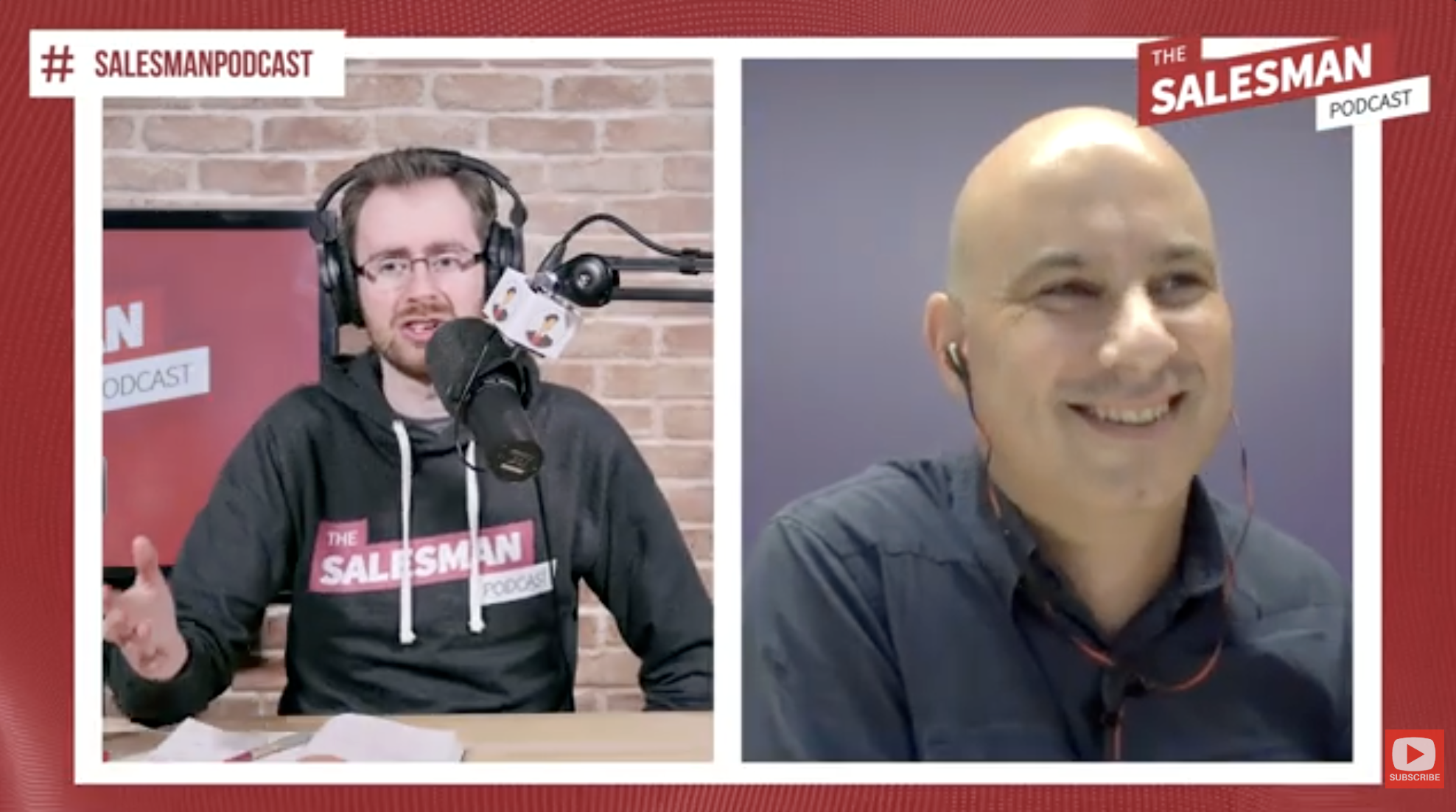
Salesman Podcast
"Increase Your Levels of Motivation BOTH In and Out of Sales"
Will Barron, Ralph Barsi
June 15, 2017
Summary
This wide-ranging conversation between Will Barron and Ralph Barsi explores the deep psychology of motivation in sales, moving far beyond surface-level tactics to examine what truly drives sustainable success.
Ralph opens by challenging the binary thinking around motivation, arguing that the best salespeople are motivated by both intrinsic and extrinsic factors. On the intrinsic side, they've done deep self-assessment work, asking themselves "why" five plus times to arrive at root cause understanding of what wakes them up every day.
On the extrinsic side, they've been blessed to work with leaders who have strong EQ and IQ, who highlight motivating factors they might not see themselves. Ralph introduces Tony Robbins' RPM model (Results, Purpose, Massive Action) as a framework for getting started with this self-assessment work, emphasizing that unless you understand what outcome you're really after personally and professionally, it's difficult to move toward it.
The conversation takes unexpected turns as Will opens up about his own life planning, including his goal to become financially independent within five years through the podcast's growth, allowing him flexibility when children become part of the picture.
Ralph responds by reframing the entire discussion around health, quoting Dust In The Wind ("all your money won't buy another minute") and emphasizing that you can't build wealth, create multiple income streams, or ensure sound retirement unless you're healthy first.
This leads to a profound exploration of whether salespeople have their priorities wrong, with both agreeing that health and happiness must come first, followed by finances and contribution.
Ralph references Gary Player's insight that if you're not physically fit, you're not mentally fit, and addresses the elephant in the room: sales is inherently stressful because salespeople measure their lives in quarters, constantly asking "how did I do that quarter and how am I going to do this quarter?"
The discussion becomes intensely practical when addressing how to manage this stress without it becoming destructive. Ralph reframes stress as a code word for fear, often caused by trying to meet other people's motives and goals you're not finely tuned to.
His solution centers on planning your work and working your plan, executing minute by minute on systems rather than just having goals. He quotes Scott Adams: "losers have goals, winners have systems," emphasizing that unless you're implementing processes, formulas, recipes, behaviors, and habits regularly, you'll never reach your goals.
The conversation concludes with Ralph's advice to his younger self: show your work, chronicle your journey, share your stresses and successes because everything in life is great copy. When you tell your story and help people connect dots from your mistakes and successes, you contribute back and grow in the process, speaking to the two core human needs of contribution and growth.
BIG Takeaways
• The Best Salespeople Are Motivated By Both Intrinsic and Extrinsic Factors – Ralph challenges the false dichotomy of internal versus external motivation, arguing from experience leading teams and carrying a bag himself that elite performers tap into both sources.
Intrinsically, they've done deep self-assessment work, asking themselves "why" five plus times to arrive at root cause, genuinely understanding what wakes them up every day and gets them into the office or out into the field.
There's a greater purpose they're chasing or that's pulling them toward grander goals, maintaining inspired feelings over time. Externally, they've been blessed to work with leaders who have strong emotional and intellectual intelligence, highlighting motivating factors they might not see themselves.
These leaders help them bring their best version to the workplace and marketplace. For some salespeople it's more external, for others more intrinsic, but trying to rely exclusively on one source creates unsustainable motivation.
The synergy of internal purpose combined with external support and recognition creates the most powerful and lasting drive. This explains why some talented salespeople struggle despite having ability (they lack intrinsic purpose) while others with less natural talent thrive (they're deeply connected to their why and supported by great leadership).
• Use Tony Robbins' RPM Model (Results, Purpose, Massive Action) for Self-Assessment – Ralph provides a concrete framework for salespeople who haven't yet done deep self-assessment work and need structure to get started.
The R stands for Results: unless you understand what outcome you're really after personally and professionally, it's difficult to move toward it, so identify specific outcomes that will fire you up to do great work.
The P stands for Purpose, which for Ralph stems from family and setting a great example for his three sons who are now young men. Whether they tell him or not, he's leading by example, and it's important to put out the best example so they're inspired to get in touch with their own purpose.
The M stands for Massive Action because once you've identified outcomes and connected with purpose, it becomes very easy to execute and do what you need to do to reach those outcomes.
Within this framework, you can then apply the "five whys" technique to get to root cause, but RPM provides the scaffolding that prevents self-assessment from becoming abstract navel-gazing. The model works because it moves from concrete (what do I want?) to abstract (why do I want it?) to concrete again (what actions will get me there?), creating a complete circuit from vision to execution.
• Personal and Professional Goals Must Complement Each Other (Not Compete) – Ralph insists that personal and professional outcomes must complement rather than compete, because otherwise you struggle with dichotomy every single day.
Half your mind and half your actions are in your professional world while the other half's in your personal world, which doesn't fly, doesn't last very long, and isn't sustainable.
This principle extends beyond individual goal-setting to how salespeople approach their customers. Prospects, customers, and suspects all have their own purposes and outcomes they're driving toward, taking their own massive action.
It's the salesperson's job, especially in B2B, to find out what those triggers and outcomes are. Even better, discover what their purpose is so you can help them arrive at those outcomes.
You're "really cooking with gas" when you're in touch with what their outcome is and not so focused on what yours is. This creates alignment where serving their success becomes the pathway to your success, dissolving the artificial separation between personal fulfillment and professional achievement. When your work becomes helping others achieve their purposes, the dichotomy disappears.
• Money Is Just an Exchange for What You Actually Want (Dig Deeper) – When Ralph encounters salespeople who claim they're "only motivated by money," he doesn't judge them because he doesn't know their story, but he challenges them to visualize having all the money they're aiming to get.
Once they've got all the money in their bank account, what will they do with it? Why do they want this money? There must be deeper meaning, whether it's starting a charity, caring for ailing family members, getting married, buying a house, purchasing a private jet, building businesses, or flying around the world.
Getting to this deeper purpose is critical for sales leaders because their reps will go through waves like all humans, experiencing dark times, bad afternoons, or rough patches lasting weeks or months.
That's when the leader can remind the salesperson of that deeper purpose behind the money, which typically pulls them out of the morass and gets them back on track. Ralph's insight recognizes that money itself has no intrinsic value; it's simply a tool for accessing experiences, security, freedom, or legacy.
Salespeople who remain stuck at the "I just want money" level haven't done the work to understand themselves, making them vulnerable to demotivation when monetary rewards alone prove unsatisfying.
• Health Must Come First (All Your Money Won't Buy Another Minute) – When Will shares his five-year financial independence goal, Ralph immediately reframes by starting with health: you can't build wealth, create multiple income streams, or ensure sound retirement unless you're healthy.
He quotes Dust In The Wind by Kansas: "With all your money, all your money won't buy another minute." We all have time we're racing against, and we must be healthy to sustain ourselves through the journey.
Make sure you're eating right, hydrating, exercising, and creating space mentally and spiritually so you can achieve long-term goals and impact more people. Ralph references Gary Player's insight that if you're not physically fit, you're not mentally fit, arguing there's merit to the idea that you must take care of yourself first to give everyone else the best version of yourself.
This health-first philosophy addresses the unspoken reality in sales: many salespeople sacrifice their health chasing targets, responding to emails from prospects saying "I hate my job" or "the job's great but it's crazy stressful and I'm feeling the effects of fatigue and prolonged stress."
The priorities most salespeople operate under (money, promotion, recognition, then maybe health) are exactly backwards. Ralph and Will agree you can boil it down to most basic components: health and happiness first and foremost, then finances and contributing back to society.
• Stress Is Fear in Disguise (Plan Your Work and Work Your Plan) – Ralph reframes the "inherent stress" of sales (measuring life in quarters, constantly evaluating performance) by identifying that stress is actually a code word for fear.
What causes this stress-fear is trying to meet other people's motives and other people's goals that you're not finely tuned to. The solution is establishing a plan: you've got to plan your work and work your plan, and the better you get at practicing working the plan, the less stressed you are.
Practically, this means daily, minute-by-minute execution. If you're an SDR who needs to book 30 meetings this quarter (10 per month), reverse engineer from end of quarter to present. Halfway through the quarter you should have 15 meetings. Measure progress weekly, seeing the path toward the goal because you've worked it forwards and backwards in your mind.
Most importantly, you've already won in your mind, visualizing smashing quota by quarter end. Maybe you cut out the number and pin it in your cubicle, tape it to your laptop, or have it pop up on your phone every two hours.
You're constantly looking at the number, making sure you're executing right steps, doing regular assessments. Ralph quotes Dr. Stephen Covey: "Frustration is a function of our expectations." Part of assessment is assessing your expectations. If you anticipate a stressful, crazy quarter (which is good), when it gets stressful you've already prepared and it's easier to navigate.
But if you don't expect things to derail, you'll have an uphill battle wondering why you're frustrated, and it's because you didn't represent expectations accurately from the outset.
• "Losers Have Goals, Winners Have Systems" (Scott Adams) – Ralph introduces a paradigm-shifting distinction from cartoonist and author Scott Adams: "losers have goals, winners have systems."
Having a goal to hit target by end of quarter is one thing, but unless you're implementing and executing on processes, systems, formulas, recipes, behaviors, and habits regularly, you'll never reach that goal. It's critical to establish what those disciplines will be.
You can't win if you don't keep score (we manage what we measure), so measure the progress you want to see by month end or year end. A practical example: at the start of the new year, list your goals for 2017/2018/etc. and pin reminders on your calendar every three months.
When the reminder pops up at end of first quarter, your goal list appears and you measure if you're taking things from X to Y in that timeframe, identifying what dials to turn or what to recalibrate on the path toward the goal. This applies to sales, life, and business.
The genius of this framework is it shifts focus from outcomes (which you can't directly control) to inputs (which you can completely control). Goals live in the future and depend on external factors, but systems exist in the present and depend only on your execution.
By obsessing over systems rather than goals, you paradoxically achieve more goals because you're consistently taking the actions that lead to those outcomes rather than just hoping and wishing they'll materialize.
• Show Your Work (Chronicle and Share Your Journey) – When asked what advice he'd give his younger self, Ralph immediately says: encourage him to show his work. Salespeople dealing with frustrations and stresses of sales should write it down, share the experience, chronicle it, journal it, expose it.
Everything in life that happens to you is great copy. If you tell your story and help people connect dots from your mistakes, stresses, and successes, you're helping out, contributing back, and growing in the process. Ralph would tell his younger self, "Hey, write it down, get it out there, share with others what you're going through," believing everyone will grow in the process.
This mirrors the two core human needs: contribution and growth. If you don't feel like you're contributing back to the human race, your marketplace, your business, or your team, there's a vacancy.
And if we're not growing, we're dying, so it's important to constantly strive to grow, flourish, and challenge yourself to be bigger and better than you are today. Will admits his biggest regret is not documenting his journey from living in a box room with terrible lighting to moving into a flat without a shower to finally having a proper studio with six-figure deals materializing.
He didn't document early struggles because he didn't want to look unsuccessful, but that narrative would now be invaluable to anyone wanting to start a podcast or media company.
The lesson extends beyond content creation to general career advice: your experiences, especially your struggles and how you overcame them, are your most valuable currency for building relationships, establishing credibility, and contributing to your profession's collective wisdom.
Transcript
Ralph Barsi (00:00):
Some of us go through life and go through our careers blessed and lucky to be exposed to great leaders.
Will Barron (00:17):
Hello Sales Nation, and welcome to today's episode of the Salesman Podcast. On today's show we have Ralph Barsi. He is an absolute legend. I really enjoyed this conversation.
And we're talking about motivation: intrinsic, extrinsic, how we can motivate ourselves to have more success in sales and in life in general. You can find out more about Ralph over at RalphBarsi.com. We link to everything including that in the show notes of this episode over at SalesmanPodcast.com.
And with all that said, let's jump to today's episode.
(00:46):
Ralph, welcome to the Salesman Podcast.
Ralph Barsi (00:48):
Thank you, Will. It's a pleasure to be here. How are you today?
Will Barron (00:51):
I'm good, sir. I'm glad to have you on, and we're going to dive into motivation, inspiration, all this good stuff. And maybe there is data and numbers we can put on it perhaps later on in the interview, but it seems like it's the intangible stuff like this that makes the biggest difference once you've got your sales basics down, once you've got a process I think.
Motivation, and maybe that extra hour of work you do when everyone else has gone home and the competition has gone home because you're motivated and driven, perhaps that's the difference between good and great in this space.
(01:24):
And something I want to start off with here is something that I've had to battle with myself when I first joined in sales. And I want to ask you kind of straight up on your experience in this: are sales professionals more externally motivated than they are intrinsically motivated?
And what I mean by that is, do sales professionals typically get motivated by their sales manager motivating them? Or are they motivated internally for success?
Ralph Barsi (01:49):
What a question, what a great way to set the tone and start off. So, I think I'd be making a very general statement if I were to say yes, salespeople are driven externally by money or they're driven by their leaders, or the opposite, if I were to say it's all intrinsic, because we're all different, Will.
But I can speak from experience. I was an individual contributor, I was a salesperson that managed a territory and carried a bag and had a quota to hit, et cetera. And I've also led a number of teams. And in my experience, the best salespeople are motivated by both.
(02:33):
So on the intrinsic side, they are very in touch with their purpose. They have gone through a self-assessment, asking themselves why five plus times to arrive at the root cause and to really get an understanding of what wakes them up every day and gets them into the office or gets them out into the field.
There's got to be a greater purpose that they are chasing or that's pulling them towards some of their grander goals that's going to get them to stay motivated and really maintain that inspired feeling that you mentioned earlier.
(03:11):
On the external side, some of us go through life and go through our careers blessed and lucky to be exposed to great leaders, people who have a strong EQ as well as a strong IQ. And they highlight areas that we might not be thinking about that motivate us to get after the goal and do our very best and bring the best version of ourselves to the workplace and to the marketplace.
So it is a little of both. For some it's more external, for some it's more intrinsic, but that's been some of my observations in my experience.
Will Barron (03:48):
So we're going to go super deep, super quick with this, Ralph. For anyone listening who hasn't performed, as you described then, a self-assessment, asking why multiple times to find the deepest underlying... it's almost like a primitive drive to achieve X, Y, Z.
Is there a process to do that that's more complex than ask why, why, why, why until you can't ask why anymore? Is it more complex than that? Or is that the best way to go about it?
Ralph Barsi (04:16):
In my experience, that's been the best way to go about it, but one model that I've used over the years comes from Tony Robbins, and he calls the model RPM. And this is a great model to get started with if you've not yet done the self-assessment and you're looking for some framework to work from.
So starting with the R, that stands for results. So unless you understand what outcome you're really after, personally and professionally, it's really difficult to go towards it. So identify what that outcome or what that list of outcomes looks like for you personally that you know is going to fire you up to do great work.
(04:57):
And then the P stands for the purpose that we just talked about. For me, my purpose pretty much stems from my family and setting a great example for my children. I have three boys who are now young men. And I know, whether they tell me or not, that I am leading by some example.
And it's important for me to put the best example out there for them so that they're inspired to get in touch with what their purpose is.
And then the M of the RPM just stands for massive action. Because once you've identified the outcome or outcomes and you're in touch with your purpose, then it's very easy to execute and to do what you need to do to get towards that outcome.
(05:39):
So try the RPM model to get started, and then of course within that model you can ask the five whys, get to root cause, et cetera. But it's a great starting point.
Will Barron (05:49):
You aligned something else with this as well, which I think often gets missed, and clearly this is a B2B sales show, but my goal and the purpose of everything that we're doing is to help salespeople thrive in sales, not just hit target, but have obviously an amazing time. Perhaps even the easiest time doing it so that they've got more time, flexibility, whatever it is to do the things that really matter to them.
I always approach my audience that they should enjoy selling, but then it's really the underlying... the ability to increase your cashflow with the amount of hustle or resources that you're putting into it that allows you to do crazy things in your personal life as well.
(06:26):
So what we'll ask here, because you brought this up in passing, should our goals be... should we have separate goals? Should we have personal goals and then should we have professional goals? Or is it all the same thing?
Ralph Barsi (06:39):
I think it's the latter, Will. I really think that the personal and professional outcomes must complement each other. Otherwise, you're struggling with this dichotomy every single day as you're at work, and half of your mind and half of your actions are in your professional world where the other half's in your personal world. That just doesn't fly, it doesn't last very long. It's not sustainable.
And I'm really grateful that you called out B2B and sales, and that's near and dear to my heart. It's our community, it's our industry, it's our profession, and I take it very seriously as I know you do.
(07:14):
So I guess my reminder to everybody in our community is hey, the customers and the prospects and the suspects that you're interacting with on a daily basis to hit your quarterly number or your annual number, guess what? They all have purpose as well. They all have outcomes that they're driving towards. They're trying to take massive action on their end.
So it's up to you, especially the salespeople in the B2B world, to find out what those triggers are and what those outcomes are. And even further, if you can get there, find out what the purpose is of your prospects and customers and suspects so that you can help them arrive at those outcomes as well.
(08:00):
And now you're really cooking with gas when you're in touch with what their outcome is and you're not so much focused on what yours is.
Will Barron (08:08):
How deep should we go with these conversations? We're kind of going off sales motivation, but I'll drag us back over there in a minute, Ralph. But when you're dealing with customers, how deep should you go with these questions?
And what I mean by this is, what happens if they don't know what their purpose is? Should we be pulling on those strings at that point? Or should we just go to where they're comfortable with talking about?
Because I've been in sales conversations, because I like getting deep with all this kind of stuff, and my experience in medical device sales, I'd be spending a lot of time with the surgeons, whether it's on training courses or at conferences or in theater. And it's just a seven-hour procedure and you're stood there with your spine crooked kind of going from foot to foot because you're all achy, you end up having crazy deep conversations with people.
(08:42):
And a lot of the time, because I'm interested in it, it turns into almost like a therapy session. And I've had both good and bad effects from that, of massive rapport, real deep relationships, and then surgeons being like, "Who is this dude that's asking me all these weird questions" when I've gone too quick.
(09:13):
So I know I've just thrown a lot at you there Ralph, but to kind of summarize this question, how do we know how far we should go with our customers? How do we know whether we are going too deep or not deep enough?
Ralph Barsi (09:23):
First and foremost, you have to be mindful of your pace. Don't try to get all the way to the end right on the first date, for example, or the first conversation. Just focus on going from A to B and incrementally over time getting to know this person.
In sales, it's our job to do a few things. Number one, we should represent ourselves as trusted advisors. So you're correct, there's a lot of latent pain in the marketplace where our customers or prospects might not know what they don't know. They don't even know there is pain yet, so it is our job to tease that out and talk to them about potential critical business issues that the prospects are dealing with today and show them a lighted path towards resolution.
(10:08):
So also by doing that and by being sensitive towards building a relationship over time incrementally, that is where you're going to establish rapport and credibility with your prospect. And from the outset, you need to make it very clear that you're in the game to build a long-lasting, trusted relationship and even friendship over time.
Because the best salespeople also rely on those relationships to get great referrals so that they can build even more relationships. And that's just how the ecosystem works.
(10:45):
But if you come blasting in saying, "Will, I want to get super personal with you now and find out what outcomes you're after, personally and professionally," I'm moving too fast. I've not yet earned the right to ask those questions.
So it's really important that salespeople stay cognizant of that and are sensitive towards let's slow down and let's just work one issue at a time. And then over time you're going to hopefully get that prospect to open the kimono, if you will, and you'll gain a new friend and a great new relationship in the process.
Will Barron (11:18):
I like the word you used then, of earning the relationship or the referral or whatever it is versus there's obviously a subsection of sales, not necessarily B2B or small-value B2B, where it's crazy amounts of cold-calling with a script which pushes you down weird questions to almost manipulate and influence someone to open up before they're ready. And it all gets a little bit squirrely when I've been on the other end of that.
When Sales Nation test out their pitches on me, which I invite them to over both email and on a Friday morning. I have loads of Sales Nation ring me up and pitch me on their products, and I give them not feedback on perhaps what's right or wrong, but on whether it makes me feel good or bad.
(12:03):
I don't want to go too far on the lines of trying to give advice if I don't feel qualified to do that. But you know what I mean? If someone pitches me and it makes me step back away from the microphone and go, "Maybe email me a little bit more information first before you shove your pitch down my throat," it's always interesting.
So I like the way you use earned there. I wanted to pick up on that. So going back to self-motivation for a second, what do you say if you have... and I don't know what percentage within a sales team this would be, but it would be at least a few. And age might come into this, less so kind of how old you are, but how many responsibilities you have I think might tie into this.
(12:45):
But what would you say to the sales rep who goes, "I'm only motivated by money, I'm only here to close deals and take away commission. That's all I care about"? What's good or bad, or what do we need to change if any of the audience have that mindset about sales right now?
Ralph Barsi (13:00):
Well, I would be slow to judge them, number one, because I don't know their story. However, I would challenge them to visualize having all the money that they are aiming to get. Once they've got all the money in their bank account, what are they going to do with it? Why is it that they want this money? There must be a deeper meaning behind the money.
So for example, maybe they want to start a charity or maybe they want to care for ailing family members or they want to get married or buy a house or whatever it is. There's got to be a deeper purpose that's behind the money.
(13:39):
Maybe they just want to buy a private jet or build businesses or fly around the world, whatever it is, that's what I try to influence them to arrive at. And then we really have an understanding of what their trigger or what their purpose is.
And it's important for leaders of sales reps to get as close to that as possible with their reps, because those reps will go through waves like all of us humans go through. And they're going to go through some dark times. They might have a bad afternoon or they might have a rough patch that lasts a couple weeks or even a couple months.
(14:15):
And that's when the leader can remind that salesperson of what that deeper purpose is behind the money. And typically that pulls them out of the morass of a bad day and kind of gets them back on track.
Will Barron (14:29):
Cool. That's what I wanted to get at, this idea and this concept that money is just something you exchange for something you actually want. And maybe there's a label and the status of being a millionaire, having a million dollars or pounds in the bank or whatever, but I think for most people who are capable of achieving that probably have deeper and bigger goals anyway.
Because I think that a lot of this... and I'm only talking about my experience here interviewing. I interviewed someone recently who's worth 100 million dollars, who sold two businesses, and he was trying to drill this into me of the cash doesn't matter, it's the opportunities that it gives you.
(15:07):
Because clearly we've only got a finite life, you've only got so much time to make most of the opportunities, and so the cash gives you the access to these things. So let's make this real for the audience and myself as well, Ralph.
Are we talking about having a notice board on the office wall with a picture of all the stuff that you want, or the 2.5 kids, or the house, or whatever it is, and every day we wake up and look at it before we start calling and emailing people? And you can tell from my tone of voice this doesn't resonate with me.
(15:41):
But it might be useful to some people. And Tony Robbins talks about this kind of thing as well, as does Tim Ferriss and a whole bunch of other people. But what's the best way to make this real for us? And once we found out what we're really aiming towards, how do we keep that within our sights?
Ralph Barsi (15:57):
I love it. So no, it doesn't mean you must have a vision board, for example, because that just doesn't work for everything. I don't have one either. It doesn't resonate with me either. But there are other vehicles that I use to remind me why I'm getting up every day and what I'm aiming toward.
So let's just take you as an example, because you brought yourself up. I mean, look at the wild popularity of your podcast. And I'm just making an assumption here, Will, that as you expand the audience of your podcast, you're likely interacting a lot with your audience offline.
(16:40):
You're getting feedback, good or bad, constructive or not, you're getting a lot of accolades and compliments. You're getting dialogue and discussion and probably some great thought-provoking questions from the audience or ideas on topics and guests.
That, I would assume, is very fulfilling to you. And as a result, you double down on the effort and you make it even better for all of us. So that tends to one of two core basic needs that every human being on the planet has, and that is contribution and growth.
(17:17):
So if you don't feel like you're contributing back to the human race or your marketplace or your business or your team, there's going to be that vacancy. And you might not be in touch with it, but that's what it is, it's lack of contribution.
And secondly is lack of growth. If we are not growing, we are dying. So it's important to constantly strive to grow and to flourish and to challenge yourself to be even bigger and better than you are today. Because it's just a core human need.
(17:50):
So long answer to your question, but I hope it addresses what you were asking.
Will Barron (17:55):
It does. It makes total sense. And while I do, and I feel that you will get this and you will want to give some insights on how we can implement it as well, Ralph, but it's one thing to talk about all this stuff of we need to grow, we need to get out of our comfort zone, that kind of thing. Is there a way to build this into some kind of feedback loop so that every year we assess whether we have grown?
And that can be in your career, that could be building a bigger network, it could be moving it sideways from sales to marketing, whatever the move is. It doesn't always have to be target gets bigger, you always smash target.
(18:33):
There's more scope to all this than that. And that kind of ties into the contribution angle of is there a way that we can, I guess, process some of this? Put it in a process so that we can even measure it? I don't know. So that we can have this feedback loop so every year we're going, "Yeah, I've contributed more, I've grown more," and then it expands, expands, expands, and that continues this path of happiness.
Ralph Barsi (18:56):
Absolutely. You know, you can't win if you don't keep score. So I'm a strong proponent of measuring... we manage what we measure. So measure the progress that you want to see by the end of the month or the end of the year.
(19:04):
There's a big difference, Will, between goals and systems. There's a great quote that I love from cartoonist and author Scott Adams that is "losers have goals and winners have systems."
And you know, it's one thing to have a goal to hit target by the end of the quarter, but unless you're implementing and executing on processes, systems, formulas, recipes, behaviors, habits on a regular basis, you're never going to reach goal.
(19:44):
So it's critical that you establish what those disciplines are going to be. So great example from a personal assessment or personal goal standpoint might be at the start of the new year, you list the goals that you've got for 2017 or 2018 or wherever, and you start to pin reminders on your calendar every three months.
And that reminder pops up at the end of March, for example, at the end of the first quarter, and in the reminder there's your list of goals. And you want to measure if you're taking things from X to Y in that given timeframe.
(20:23):
And what dials you need to turn or what you might need to recalibrate on that path towards the goal in order to get there. That's just a simple example of how, on a personal basis, you can assess how well you're doing against the goals you set at the beginning of the new year.
And it applies to sales and it applies to life and business and pretty much anything you want to apply it to. You've got to establish a discipline and a system to get to where you're going.
Will Barron (20:50):
How do we apply this to slightly more intangible things such as... so I don't have kids or anything like that, but part of my life goal, I've talked about this on the show before, is I want to... with the show's success, and I'm talking five, six years into the future perhaps, I want to be able to semi-retire.
So have enough coming in a month to pay kind of a mortgage, food, bills, that kind of thing. And I'm lucky that my girlfriend's a doctor. She doesn't want to kind of retire early at all. She's super into the world of medicine, so there will always be an income from that side.
(21:26):
But I'm planning this out from the fact that she might get ill, she might change her mind, there's children around, there's all kind of other things that could change. So I'm trying to reduce some of the risk of just living, essentially.
And that I want to have an investment in multiple fashions that are as secure as what they can be that drives just enough so that we could live comfortably, not live a baller life, but again, pay mortgage, bills, food, so that I can, when kids are kind of on the table, I can make that decision then whether I want to continue working from home because the studio is kind of in my flat here in Leeds.
(22:05):
And I can look after kids as well as kind of do this part-time. So I'm not going to be retired from work because I'm sure looking after multiple children is far harder and more time-consuming than hosting a podcast. But you get where I'm going with this.
There's a financial number that I want to hit to be able to make this happen, but the number's less motivating to me than the opportunity of having all these options in front of me. And this all relates to the audience as well, but how do I make that intangible, reducing risk in my life, giving myself more opportunity by this financial goal, how do I tie something that can go in my diary every month to keep me motivated over the longer term to push towards that?
(22:51):
Do you hear what I'm saying? I could use that financial number, be it a million dollars, two million dollars, $600,000, whatever it is, but that wouldn't motivate me over the long term. It's the other stuff associated with it.
Ralph Barsi (23:03):
Start with your health, Will. Because you can't build this stack of firewood, you can't create multiple streams of income, you can't ensure a sound and calm retirement unless you're healthy.
There's a great quote from the song Dust In The Wind by Kansas from the '70s. It says, "With all your money, all your money won't buy another minute." So we all have time that we're racing against, and we have to be healthy to sustain ourselves through this journey.
So keep that in mind first and foremost. Make sure you're eating right, make sure you're hydrating, make sure you're exercising, make sure you're creating space mentally and spiritually so that you can go on and retire in five years and build your wealth along the way.
(23:57):
The fact that you put a timeline on it is fabulous because what that's going to drive in you is a sense of urgency. "Hey, I've got five years. I better get my act in gear here, and I better get my ducks in a row so that I can realize that vision in the five years and I can go do what I really want to do and maybe impact even more people."
And when you state that goal, like you just did publicly, all of us in your audience, we're going to help get you there. It's just human nature as well.
(24:29):
There's more good people than bad people out there, and people will move things out of the way in the universe to get you to where you need to go, Will. So establish that sense of urgency and drive towards it.
You know, you and I talked about Tony Robbins in this very talk, and Tony is a protégé of a gentleman named Jim Rohn, the late, great Jim Rohn. And one of Jim's famous quotes is, "Your success is not dependent on the economy as much as it is on your philosophy."
(25:03):
So I hate to break it to you, but the economy is not sustainable in the short term. It's likely going to crash, as we all know. So we really can't stack all our eggs in that one basket.
And back to Tony Robbins, he just published another book called Unshakeable that helps you see your way through the rough times of the economy, establish multiple streams of income, diversify, all that stuff. So I would highly recommend people listening and watching get that book and start to build that stack of firewood so that you can make it through the storm when it does hit. Because it's inevitable, Will, it's going to hit.
(25:42):
But those are some things I would highlight and make sure you're paying attention to if you do want to attain a goal in the short term or even long term, or if you want to retire in five years and eventually have children or start a family or help other families. Whatever it may be, it's all relative.
There's some complexities and complications that you're going to face throughout the process, so just make sure that you're healthy, mentally, spiritually, physically, so that you can get through it.
Will Barron (26:11):
For sure. And I think you touched on something here that perhaps if I hadn't opened up and shared that, we wouldn't have got to. But do we all have our priorities wrong? Is it as simple as that?
Should our priorities be our health and then the health of our immediate family and then our friends as well? Is it as simple as that? Can we almost dumb it down to this really enlightened kind of point that, as you described, there's no point in having the Nissan GTR, there's no point in having all this other stuff if you're super ill and you've only got six months to enjoy it.
Ralph Barsi (26:49):
I really do think you can boil it down to the most basic components, and that is health and happiness first and foremost. And then you go from there into finances and contributing back to society, et cetera.
Gary Player, famous golfer on the PGA Tour, once said that if you're not physically fit, you're not mentally fit. And I think there's a lot of merit to what he says, that you got to take care of yourself first in order to give all of us the best version of yourself.
Will Barron (27:21):
For sure. I get this. And the reason I ask that is I get a lot of Sales Nation emailing me, one, sales questions and things like that, but then the one thing that follows up very quickly is "I hate my job." The next thing that follows up is "The job's great but it's crazy stressful and I'm feeling the effects of fatigue and prolonged stress from this."
And a lot of time they're asking... my answer is, as we talked about Tony Robbins, is to read Awaken the Giant Within. I mean, this documents the process of getting your priorities right better than any other book or resource that I've ever read.
(28:00):
And it helped me come to terms that I wanted to start a show and reach a bigger audience than what I could contribute in my previous medical device sales role. That was a big kick in the ass for me to change up things when I read it a number of years ago.
So my response is always that, because I'm not qualified to be diving into stress or the health issues of anyone over email, clearly. But I just wanted to bring that up because is this something that you see within the world of sales leadership that we should be spending more time on? People aren't spending enough time on?
(28:32):
That it isn't a conversation that happens in sales? It seems that almost when you jump into sales, you're allowing yourself to be stressed out crazily for a number of years, and it's an accepted part of the deal.
Ralph Barsi (28:45):
Yeah, it's a tough gig, isn't it? So salespeople are driven by quarters. They measure their life and their career over how did I do that quarter and how am I going to do this quarter? And that's inherently stressful. But I also...
Will Barron (29:01):
And let me stop you here, Ralph. Does it have to be inherently stressful? So you've got positive stress of I need an occasional kick in the ass and get content out and do stuff like this. And a little notification in my calendar gives me that little bit of, I don't know what neurochemical is hitting me, but it's like "Oh crap, I need to get this done before this deadline."
Because you've got a little bit of positive stress there. I'm talking more about "I've got to deal with this customer, then my boss is on my back, and then this, and I've not seen my wife or partner."
Ralph Barsi (29:34):
No, it doesn't have to be stressful. But I think what causes stress is trying to meet other people's motives and other people's goals that you're not finely tuned to. And that causes stress. And stress is a code word for fear.
So I think it's really important to establish a plan, and I always talk about you've got to plan your work and work your plan. And the better you get at that, at practicing working the plan, the less stressed you are.
Will Barron (30:05):
What does that mean practically? Because it's all good stuff, but I don't want to gloss over it.
Ralph Barsi (30:11):
Daily execution, minute-by-minute execution of the plan. So if I'm a sales rep and I have a quota to hit by the end of this quarter, and let's just say... let's say I'm a sales development rep and I'm supposed to book 30 meetings this quarter, 10 meetings a month.
Well, if I reverse engineer from the end of the quarter to present, I know that halfway through the quarter I should have what? Probably 15 meetings. So I measure my progress on a weekly basis, and I already see what the path looks like towards the goal because I've worked it forwards and backwards in my mind.
(30:49):
And what's most important is that I've already won in my mind. At least the best sales development reps have already won in their mind. They've already visualized smashing that quota by the end of the quarter. And they see it on paper, and maybe that is something that you cut out and pin up in your cubicle or you tape it to your laptop or you have it come up on your phone every two hours.
But you're constantly looking at the number and making sure that you're executing on the right steps towards that number, and you're doing regular assessments to measure your progress.
(31:24):
Same applies to life, to life goals and to business goals. And another fabulous quote from Dr. Stephen Covey, who wrote Seven Habits of Highly Effective People, is that "Frustration is a function of our expectations."
So maybe part of that assessment is to assess what your expectations are. You're either anticipating a stressful, crazy quarter, and that's a good thing, I think, so that when it does get stressful and crazy, you've already prepared for it. And suddenly it's a little easier to get through those stressful times.
(32:01):
But if your expectations tell you that you're not expecting things to derail in the quarter or the year or in life, then you're going to have a really hard time and you're going to have an uphill climb to battle with on a regular basis. And you're going to wonder why you're so frustrated, and it's because you didn't represent your expectations accurately enough from the outset.
It's not too late to fix them, it's not too late to recalibrate if you need to, but it's important to know that.
Will Barron (32:30):
This makes a lot of sense. I know from my perspective, both in sales and now with the podcast, I'll give both examples. In sales, I had a... whatever the title is, it was a couple of million pounds, whatever it was. And I would do what you described, essentially cut it out on a piece of paper, stick it to the front of my laptop, and then every time I opened my laptop I would be... not even consciously doing it, maybe. Maybe unconsciously auditing myself, my activities of "Am I moving towards this or am I, as you described before, going and helping other people with their goals internally?"
Which obviously is important if you want to be known within your organization and you want to progress perhaps up that ladder. There's value to that.
(33:11):
But a lot of the time I was just doing stuff that someone else didn't want to do, they couldn't be bothered to, they passed it onto me as their kind of sales account manager at the bottom of the sales leadership ladder, if that makes sense.
Ralph Barsi (33:23):
They delegated.
Will Barron (33:24):
Yeah, it was "I've got this report that's due. I'll give it to..." our team was seven lads, I think. So it was like "I'll give it to the lads, they can all do a little bit each, and then it'll all come together."
And you know that the sales manager wants to go home early on Friday because they're going to watch the football or something. And so that's why it's coming on your desk. So there's a bit of a conversation here, a deeper conversation of whether salespeople should just be selling or whether they should be doing all this other stuff as well. All the admin side of things.
(33:54):
But anyway, I had this number stuck to my laptop, and every time I opened it, it was a reminder of I should be moving towards this. But then with the podcast as well, my intangible goal is to help the audience thrive in sales.
So this is a brilliant example. We've talked about strategies that will help the audience hit target today. We've also hopefully unhinged a couple of cans of worms of stress, of priorities, of all these other kind of things as well that the audience will, again, not just help them hit target but will help them thrive.
But then the more tangible goal I've got is to hit a million downloads a month.
(34:34):
And we're at 500,000 as of last month. So that's my kind of tangible goal. So now that is stuck on a Post-It note to my monitor here in the office. So every time I open an email and it's an opportunity, I always kind of refocus of is that an opportunity that's going to help me hit that specific target?
And I can only have one target because otherwise I just go all over the place and don't get nothing done. I don't know whether that's... it's probably just my personality. I don't think that represents everybody. Some people can focus on multiple kind of pathways, but I know for me, if I have anything other than one goal, I just never get anything done whatsoever.
Ralph Barsi (35:13):
Keep it simple and timely and measurable. I think the acronym is SMART, make it a smart goal. There's a reason why objectives and key results or big hairy audacious goals are limited to maybe three goals.
Make it very simple and hack away at the unessential and you'll get there. And knowing you, when you reach a million, you're probably going to triple that goal and bring it up to three million, and so on and so forth just because...
Will Barron (35:43):
Honestly, I don't know, Ralph.
Ralph Barsi (35:44):
Oh, okay.
Will Barron (35:45):
So this would be a point that I'll reach. A million downloads a month, the sponsorship and partnership opportunities, never mind the sales industry, we're talking like Toyota or whoever. They want to be in front of that audience.
At which point my financial goals will, as we talked about semi-retiring early or a better way to describe it is becoming financially independent perhaps, because I'm always going to work. I can't last two minutes watching TV or anything like that. I'm not ADD, but I've got a little streak of that in me that I've got to be doing something, I have to be growing something. Otherwise I just get bored out of my brain.
Ralph Barsi (36:24):
Same here.
Will Barron (36:24):
So we're talking about...
Ralph Barsi (36:24):
Same here.
Will Barron (36:26):
Yeah, I can get that, right? So I'm talking about becoming financially independent. That's probably a better way to describe it.
So at a million downloads a month, that becomes feasible within a three-to-five-year window, depending on how low I can keep my costs during that window. And obviously there's unfactorable elements that will come into that of people being ill, people moving, girlfriend wanting a house, all this kind of stuff. So I'm appreciative of all that.
But honestly, I think at that point, my goal might shift to really, really help a million downloads worth of people a month and go deeper with them versus just increase the width of it.
(37:08):
I think that might be the shift. I just thought it'd be an interesting insight for you there as you were saying that. And everyone makes this assumption that you want your audience to just be as big as possible, but I think there's real value, and this might be super helpful for salespeople as well if they think of it like this.
I'd rather have 20 amazing customers that are loyal to me and will order with me every single year versus 100 customers that they don't really give a shit over the long term. You might win the business, you might not next year. And that's been my focus of all of this, and I think that might relate to the podcast kind of in that 18-month, two-year time that it's going to take us to get there.
Ralph Barsi (37:46):
That's a fabulous take, and I couldn't agree with that approach more now that you've called that out. So I think it's Seth Godin or maybe Tim Ferriss who talk about the first 1,000 followers and really focusing on...
Will Barron (38:01):
Kevin Kelly. Kevin Kelly. I'll link to the article...
Ralph Barsi (38:03):
Oh, Kevin Kelly.
Will Barron (38:03):
...in the show notes. Tim Ferriss talks about him all the time. It's the founder of Wired Magazine. 1,000 True Fans is the article.
Ralph Barsi (38:11):
There it is, 1,000 True Fans, thank you. I think that's gold, to be able to tend to them and make sure that you're providing that audience what they're expecting and going beyond those expectations. That's going to bode well for everybody. It's going to create a win-win situation.
Another great influencer that I've followed for some time now is Ramit Sethi. Are you familiar with Ramit's work?
Will Barron (38:39):
Only on a surface level, as an entrepreneur versus his work, his specific products.
Ralph Barsi (38:44):
Sure. So he's, I believe, based in both New York and San Francisco and runs I Will Teach You To Be Rich as a blog and a business, and is also an author of a book titled the same. And also runs another company called Growth Lab.
And what I love about Ramit is when he is bringing people into his program to teach them how to start freelance businesses based on their passions and their skills, he's excellent at disqualifying people.
For example, he won't bring in anybody into his program who's in credit card debt of any kind and of any amount. And as a result, I'm not part of his program because I have a little bit of credit card debt.
(39:30):
So he's disqualified me as somebody who's going to be part of his program because I need to get my house in order first before I can really take it up a notch or two. And I really admire that.
And I think it speaks to what you're talking about too, Will, where you just got to sometimes disqualify folks that you might not want in your audience. And if people unsubscribe, maybe that's a good thing. And that the million that you do acquire are your true fans, true followers, and could do good work in their worlds as a result of being part of your audience.
Will Barron (40:04):
For sure. And I think organically, and you mentioned a couple of people that I look up to within this conversation, the Tim Ferriss, the Tony Robbins, people of that nature.
My thesis on this, and I might be totally wrong, and we might catch up in 10 years time and I'm wearing four Rolexes and I've just arrived in my private jet and I've got 50 million subscribers a month kind of thing, and I'm like, "Sod it, I'm just rinsing everyone for everything that they've got." It's very unlikely that that's going to happen, but... it's almost never going to happen, but it could happen for whatever reason. I just turn into a complete asshole.
(40:40):
But I think if you do that, very quickly that audience disappears. And when you look at people like Tim Ferriss, Tony Robbins, people of that nature, they've been putting out content forever.
And I think the value of all of this lies with long-term, not necessarily relationships with individuals, but deeper relationships with individuals. And where I'm going with this is I think it could be potentially useful for the audience to even just audit their industry, the amount of decision makers that they've got in front of them, and see really how many people can make them hit target over the long term.
(41:17):
So for me in medical devices, I would only have to have, say, 20 urologists buy from me every year and their associated accounts. So the procurement team, the CFO of the hospital trust, the nursing staff, all headed up perhaps, if you want to give it a weird structure because it's not headed up like this at all internally, but headed up by that individual urologist.
So my 1,000 true fans becomes 20 key decision makers, which becomes, say, 100 influencers. And that's a manageable number of people that you can legitimately be business buddies with, isn't it?
Ralph Barsi (41:56):
Oh, absolutely. It reminds me of Metcalfe's law of networking. You know, if you have two phones, you have two connections. If you have five phones, well, you have 10 connections. If you have 12 phones, I think it is, you have something like 60 connections.
So if you just focus on that small number of your very best customers or your very best prospects and you do the numbers, it can go very well for you if you're treating them with exceptional service and you're paying attention to their business and you're providing answers, as we talked about at the beginning of our discussion, and you are a true, genuine, sincere, trusted advisor of theirs. And you're a partner of theirs as well in this business relationship.
Again, you've created a win-win situation, and it's probably much more fulfilling and much more rich than the huge network of people that you're paying half attention to.
Will Barron (42:54):
For sure.
Ralph Barsi (42:55):
I think in this case, depth trumps breadth, and it's much better to go deep than to go wide and be an inch thick versus a mile deep.
Will Barron (43:03):
For sure. And of course, this aligns with your deal size, it aligns with your industry, your vertical, decision makers, all this kind of stuff. I'm not saying that you need just to be best friends with two people and you're going to make millions. Clearly there's a strategy to it.
But with that, Ralph, I've got one final question, mate, that I ask everyone that comes on the show, and that is if you could go back in time and speak to your younger self, what would be the one piece of advice you'd give him to help him become better at selling?
Ralph Barsi (43:28):
I would encourage him to show his work. So we talked earlier about salespeople dealing with the frustrations of sales or the stresses of sales. Write it down, share the experience, chronicle it, journal it. Expose it.
I think everything in life that happens to you is great copy. And so if you could tell your story and help people connect the dots from your mistakes or from your stresses or from your successes, you're helping out, you're contributing back, and you're growing in the process.
So that's what I would tell my younger self. "Hey, write it down, get it out there, share with others what you're going through," and I think you'll all grow in the process. That would be some words of wisdom I'd give.
Will Barron (44:19):
I love this.
Ralph Barsi (44:20):
Great question.
Will Barron (44:21):
Thank you, sir. One of my biggest regrets of doing the show from 18 months ago to now is not better documenting the progress. So this time last year, I was still living with one of my good mates. I moved in with him to keep my rent costs... well, they were almost insignificant at that point, and all my bills and food and everything, because we split the bills and obviously we cooked for each other and all this kind of stuff.
Because I wanted to give myself a decent runway to get the podcast launched and all the other stuff I was doing at the beginning when we first launched the website and all this kind of stuff.
(44:58):
And I was too embarrassed to document things with video then because it was really crappy. I was in this tiny... I was in his house. There's literally the box room that barely fitted a single bed in, was my office. And the video footage in there was atrocious because the lighting was terrible, and it was just really hard at the time to even just create content. And even just to think slightly bigger.
I moved from there into a flat in Roundhay about six, maybe eight months ago now, and it was, again... Roundhay's a really nice place in Leeds, and I know that I'm kind of successful in the realm of just living in the UK and having healthcare and all this kind of stuff. So I'm grateful for all that.
(45:47):
But I'm still going to moan about the situation I was in. The flat I was in, the only flat I could afford, it didn't even have a shower. So I was having a bath every day, which is a massive time suck and a pain in the ass.
And now I've moved into, about four months ago, I moved into this place. It has a massive office. And we can talk about this when we hang up, when we wrap up here in a second, Ralph, but I'm just about to do essentially two, maybe even three six-figure deals with the biggest companies who are in the sales industry. And one of these deals is doubling up on the studio.
I think it'll be up by the time this show comes out, so I'm not ruining any surprises. But there's going to be an amazing video wall behind us.
(46:29):
It's essentially going to be a proper TV studio but here in my flat. And this is all come about from six months ago. The video that we did, the camera was right in front of my face because the wall behind me wasn't big enough to have anything on it.
So anyways, long story short, I really regret not documenting that. And I didn't do it at the time because I didn't want to look like an idiot. I didn't want to look unsuccessful. But now this narrative and the story of having documented would be really valuable to anyone else who wants to start a podcast or media company or anything like that. And so I kind of, I just wanted to piggyback onto your point there of that was something that I really regretted.
Ralph Barsi (47:06):
I understand completely. I feel the same way about some of my experiences in my career. But hey, we can only look forward, right? And keep moving forward.
So next time I'm in the UK, I'm likely going to visit you in that brand new studio in person. How about that?
Will Barron (47:22):
Love it. Literally, we're Wednesday today? It's all arriving on Friday, so it'll be...
Ralph Barsi (47:28):
Oh, awesome.
Will Barron (47:29):
...set up. It's arriving on two pallets, and clearly I don't have a forklift truck to get the pallets off the back of the truck, so the delivery people are going to have to give me a hand and shift it off. But yeah, again, we can talk about it near the day, mate. But it's going to be fantastic. And I appreciate that.
And with that, Ralph...
Ralph Barsi (47:45):
I was going to say, take care of them. Remember they too have a purpose and results, and they're taking action. So get in touch with that, all right? It doesn't matter if they're the ones with the forklift bringing in two pallets and they're going to be off in 20, 30 minutes. Just get to know them real quick if you can.
Ralph Barsi (48:04):
Make sure they're having a good day.
Will Barron (48:06):
For sure. My solution for all of this is to just get them a coffee. If you're the...
Ralph Barsi (48:10):
Goes a long way.
Will Barron (48:11):
If you're the first or fourth delivery in the morning and you're lifting stuff around, just a warm brew when you've been driving in a manky van all day is kind of... that's my insight to that.
And with that, Ralph, I want you to tell us a little bit about where we can find out more about you, of course, but then you've got a really interesting twist on your email subscriber list in that you reply to everyone in person and it's not all weird and automated, which was unique. No other guest on the show has ever come out with anything like that.
So tell us more about yourself, where we can find out more about yourself, Ralph, and how we can get on that and experience it.
Ralph Barsi (48:45):
Thanks, Will. Sure. So my URL is RalphBarsi.com, R-A-L-P-H B-A-R-S-I dot com. And right on the home page, click subscribe and I will share with you a bevy of content that I have produced on sales and management and leadership over the course of several years, for free.
And I do that by way of a personal email of which you also become a part of a mailing list. And every now and then I'm going to reach out to you in person to answer questions, et cetera. And I'll do that until the math catches up with me and it just doesn't scale any longer.
But as of now I might have eight to ten subscribers, so it's doable. But in all seriousness, as the audience grows, I do make it a point to get in touch with them personally through email, and I keep it real.
(49:38):
I try to avoid automation at all costs. I'm not a huge fan of it. I think we steer far away from personalization and customization, and I want to keep it as real as possible as long as I can.
Will Barron (49:49):
Amazing stuff. Well, we'll link to that in the show notes of this episode as well over at SalesmanPodcast.com.
And with that, Ralph, I want to thank you for your time. I want to thank you for going deep, and we kind of gone back and forth and in one rabbit hole and into the next. We started talking about priorities and motivation and self-motivation, and I don't know where we ended up. But it was an awesome show. I appreciate the insights and the time, and I want to thank you for joining us on the Salesman Podcast.
Ralph Barsi (50:12):
Cheers. Thank you so much, Will.