🎙️Transcript: Sales Stories Podcast with Doug Landis
Sales Stories Podcast
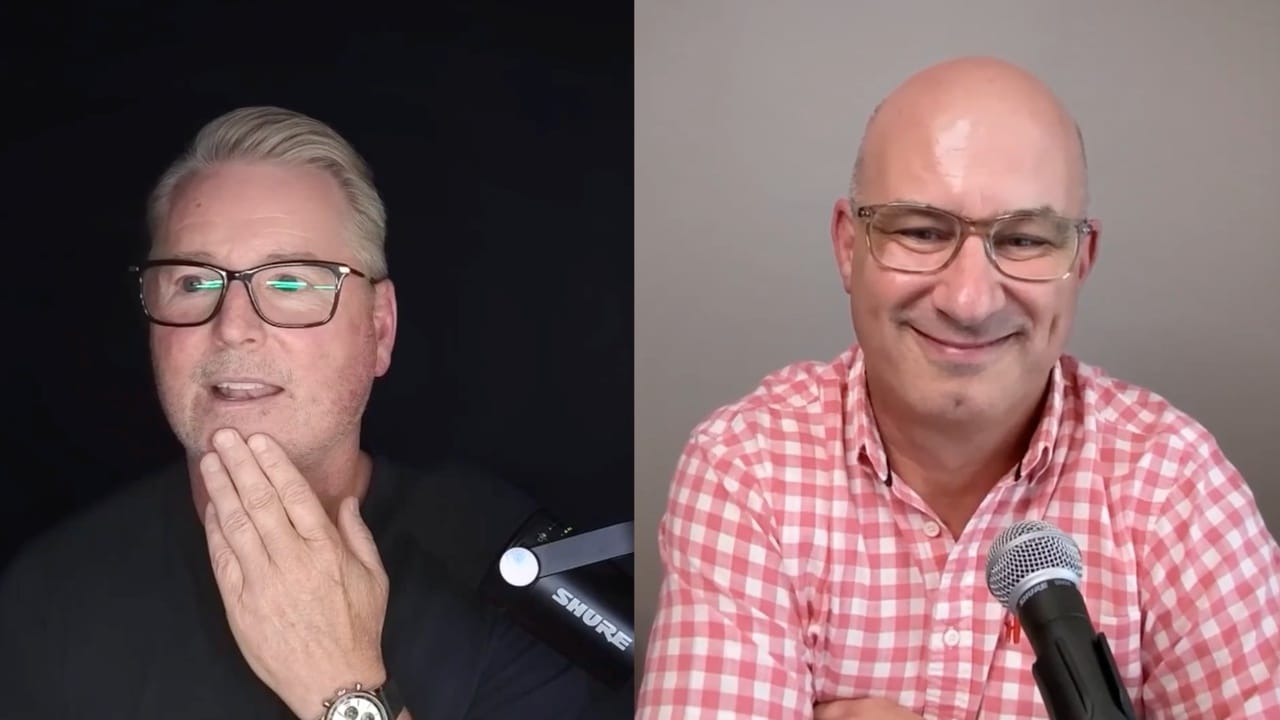
Doug Landis, Ralph Barsi
February 17, 2026
🎧 Hear on Spotify
📺 View on YouTube
BIG Takeaways
"People for Others" Philosophy Shapes Leadership and Life - Ralph's Jesuit education at St. Ignatius (motto: "people in service of others") is "definitely steeped in the way I live life, not just lead people and run teams." This servant leadership approach means being vulnerable but candid, providing context before driving initiatives: "Here's how I feel about this and why we're doing it. We're all trying to elevate one another, but we can't do it unless A, B, and C happens." The same philosophy applies to sales, connecting to the concept of "servant sellers" who can honestly tell customers when a different solution might serve them better.
Communication Major Was Perfect Foundation Despite "Barely Making It Through College" - Ralph chose communication specifically because "it was a major that didn't require a lot of math classes," but if he "had to get up in front of the class and give a speech, it was no problem." This seemingly easy path actually aligned perfectly with his natural talents and set the stage for a 30-year sales career built on strong communication skills. He even met his wife in speech class at St. Mary's, proving that playing to your strengths rather than forcing yourself into areas where you struggle can be the smartest strategy.
Two Constant Threads Across 30-Year Career: People and Process - Despite spanning eight companies (UPS, CitySearch, Ticketmaster, Elsevier, InsideView, Achievers, ServiceNow, Kahua), Ralph identifies two unchanging elements: "At the end of the day, it's all about people" and "the importance of process and discipline." Too much focus on people without process leads to chaos; too much focus on process without people leads to robotic execution without heart. Ralph has successfully balanced both, recognizing that processes serve people and people execute processes, creating a virtuous cycle.
Technology Should Enable Relationships, Not Replace Them - The biggest change in sales leadership over Ralph's 20-plus-year career is the explosion of technology: CRM systems, sales engagement platforms, sales intelligence tools, marketing automation, and AI. While this creates opportunities to be more efficient and personalize at scale, "it's easy to get caught up in the technology and lose sight of the fundamentals. At the end of the day, it's still about building relationships and solving problems for people." Technology multiplies what you're already doing; if you're building relationships poorly, technology will help you do it poorly at scale.
The Four Attributes Ralph Looks For When Hiring SDRs - Ralph's hiring criteria focuses on coachability (can they take feedback and adapt?), work ethic (are they disciplined and consistent?), curiosity (are they asking good questions about the business and customer?), and competitiveness (do they have fire in their belly?). These four attributes work synergistically because a coachable, hardworking, curious person without competitiveness might plateau at "good enough," while a competitive person without coachability will hit a ceiling when they think they know everything. The combination creates SDRs who work hard, continuously improve, uncover valuable insights, and drive to win.
Four Strategies for Helping SDRs Deal With Rejection - Drawing from getting "rejected constantly" at CitySearch, Ralph helps SDRs understand rejection is not personal (it's about the prospect's situation, not you), develop resilience (the best salespeople bounce back quickly), learn from rejection (ask why and what you can improve), and celebrate wins (recognize successes to build confidence and momentum). This framework prevents confidence-destroying internalization while transforming rejection from failure into data. Celebrating wins creates positive reinforcement that balances the natural negative reinforcement of rejection.
The Legendary CitySearch Kitchenware Store Ejection Story - In 1999, Ralph walked into a kitchenware store on Oakland's Piedmont Avenue wearing a sport coat and carrying "a briefcase filled with paperwork about the internet" to pitch the owner on having a "presence on the worldwide web." The owner sarcastically said "This sounds really interesting. Walk with me" and proceeded to walk Ralph through the store, out the door, and onto the sidewalk before telling him "Look, dude, take a hike, man. I got your worldwide web." Ralph was devastated at the time but over the years it's become funnier, perfectly illustrating early-career lessons about reading the room, understanding customer context before pitching, and developing the resilience to laugh at devastating rejections years later.
Transcript
Doug Landis (00:00):
I've got that all sorted. But dude, Ralph, my man, it has been ages since we've caught up properly, way too long.
But as I was saying with somebody earlier today, I feel like there are certain people that you meet in your life, both personally and professionally, where it doesn't really matter how much time passes, you still have so much affection and respect for each other and just love for the person. You want to see them wildly successful. And even though it might've been a while since you've caught up, it's like we don't skip a beat.
Ralph Barsi (00:31):
We don't. No. Couldn't agree more. It's so good to see you. I'm very grateful for the opportunity just to sit and chat with you for a little bit.
Doug Landis (00:38):
Ah, that's what we're going to do, man. We're going to talk. We're going to talk and we're going to start with talking about, my hunch is you've got this love for San Francisco.
Given the fact that you're one of the few people that I actually know grew up in the city of San Francisco, far too many of us were transplants from either the Bay Area or other parts of the world. When you think about growing up in a city rich with so much contrast and culture and history, what in those experiences, walking those hills, helped you to navigate the diversity that has shown up in your life over the years?
Ralph Barsi (01:24):
What a good question. Wow. So for the record, I grew up in Pacifica, which is about 15 miles south of San Francisco. But my father and his parents were native San Franciscans. My father's still with us, thankfully. And my mother moved to San Francisco from Chicago in the eighth grade and met my father. How about that? Started dating him and they're married to this day.
Doug Landis (01:52):
No way. That's incredible.
Ralph Barsi (01:55):
It's incredible. So anyway, I went to school in San Francisco. I went to St. Ignatius College Prep right there in the Sunset District, and my grandparents lived in the Excelsior district.
Doug Landis (02:07):
That's amazing.
Ralph Barsi (02:07):
So I know San Francisco very, very well, and it remains my favorite city. And to answer your question, Doug, I have felt in my experience that that city has always had open arms. It's always welcomed every walk of life into its gates.
And my grandparents on my father's side were staunch active members of the Italian-American Social Club on Mission Street, Mission and Russia to be exact.
Doug Landis (02:40):
Nice.
Ralph Barsi (02:40):
And the Barsi family for generations has been part of that social club and are to this day. And that's just a little snippet and a little example of the culture that you could build within the culture of San Francisco.
Doug Landis (02:56):
Totally.
Ralph Barsi (02:57):
There's the Irish Club, there's the Armenian Club, there's the Scottish Rite Club, I mean the Swedish Club that Lars Nilsson I think is part of.
Doug Landis (03:07):
Yeah, probably.
Ralph Barsi (03:09):
But I mean, San Francisco is well known for that to this day. What I do miss, but I think is starting to come back is the music. I mean, we had such a scene. I know we had one in the sixties prior to my arrival, but we definitely had one in the eighties and nineties. And I miss that a lot.
Doug Landis (03:27):
Growing up in that environment. And it's wild actually. I've always thought of you in San Francisco. I didn't realize actually you grew up in Pacifica, by the way. I grew up surfing at Linda Mar Beach, so I love Pacifica.
What's so interesting, but even being close, I mean just for everyone listening, Pacifica is what, 10, 15 minutes away from the city?
Ralph Barsi (03:46):
Yeah, super close. Yeah, super, super close.
Doug Landis (03:47):
But growing up in that environment, what did that teach you about people and differences and maybe the rhythm, because music was a huge part of the city for a really long time, it will likely come back. But what did that teach you and how has that carried over into your own leadership skills as a leader?
Ralph Barsi (04:07):
Oh, I mean, at the essence that we're all different. We all have robust, rich backgrounds and not everybody's a storyteller. Not everybody knows how to tell that story and tell that narrative about that rich background that they have or those skills that they possess.
And that's what I learned growing up with the diversity and the adversity as well. I had a very nice life, but we had our challenges as well, just like anybody else. So all of that translated into selling and sales and sales leadership, and there's stuff I pull from to this day from things I grew up with and experiencing.
Doug Landis (04:50):
Yeah. Well and think about it, St. Ignatius, right? It's a Jesuit school.
Ralph Barsi (04:56):
Yes.
Doug Landis (04:57):
And then did you go to St. Mary's after that? Is that right? You stayed in the Bay Area?
Ralph Barsi (04:59):
I did. St. Mary's College in Moraga, California.
Doug Landis (05:02):
Sweet, sweet. Stayed in the Bay Area. I feel like both those schools are kind of steeped in service and reflection and purpose, and I'm curious, did those values carry, being in those two different schools that carry the same kind of values, did this carry over to you into your professional domain and how did they fit into your development as a leader?
Ralph Barsi (05:24):
Oh, thank you for bringing it up. A hundred percent they did. So for example, at St. Ignatius led by the Jesuits, as you mentioned, their motto at the time was "we were men for others."
Now mind you, it was an all boys school, all boys Catholic prep school. It's now and has been for the better part of 20 years coed. So it's now "people in service of others" or "people for others."
(05:45):
So that is definitely steeped in the way I live life, not just lead people and run teams. I always feel like if I'm not making a contribution for the greater good, paying it forward and honoring those who made sacrifices for me to get where I am, then what's the point? What are we doing here?
Doug Landis (06:09):
Amen. Yeah. I remember a long, long time ago, probably like 15 years ago, Kyle Porter and I were having this conversation about this notion of being servant sellers in the world of sales. If you're there to really, truly help your customers, you can be honest about and transparent, to our friend Todd, you can be transparent about like, "Oh, you know what? That's actually not really our strong suit here. You might want to go with a different solution." Or it's like, "Hey, let me find out. Let me not try and pull the wool over your eyes and BS you."
The same can be said with leadership when you're leading teams. Your job there is to help elevate them, right? So what a great foundation for a successful career and you've had one.
Ralph Barsi (06:56):
Yeah, I appreciate that. And yes, I mean both Todd and Kyle are great illustrators of that approach and definitely provide the context before they ask a question about something or drive home an initiative.
And I think that's really important to be a bit vulnerable, but also be candid and let people know, "Hey, here's how I feel about this and why we're doing it. We're all trying to elevate one another, but we can't do it unless A, B and C happens. And so this is where all of you come in and this is how quickly we need to get this done."
It seems to resonate more often than not when you provide that preemptive context before just giving the guidance or the initiative.
Doug Landis (07:39):
Yeah. If my memory serves me correctly, communication was, were you a communication major? Communication was your focus?
Ralph Barsi (07:47):
Yes. I barely made it through college. It was a major that didn't require a lot of math classes.
Doug Landis (07:58):
Nice. Yeah, of course. I thought there wasn't going to be any math in this conversation.
Ralph Barsi (08:03):
If I had to get up in front of the class and give a speech, it was no problem.
Doug Landis (08:07):
Yeah, totally.
Ralph Barsi (08:08):
I was happy to do that. So the communication major just hit home perfectly for me. So yes, long answer to your question, yes.
Doug Landis (08:17):
Communication. But it teed you up perfectly for a career in sales. And it's also such an important and valuable skill and you're so naturally gifted at it. I think it was a good way to fall into a major.
Ralph Barsi (08:32):
It was fortunately for me, Doug, my wife, my girlfriend at the time, she was also a communication major. So we met in speech class at St. Mary's.
Doug Landis (08:42):
Oh, wow.
Ralph Barsi (08:42):
Crazy, right? So she's giving a speech, I'm giving a speech, and we dated on and off throughout college, and then two years after college we got back together and got married and we've been married ever since.
Doug Landis (08:56):
That's so cool. I love it. I love it so much. Okay, so communication major, you graduate from St. Mary's, what was your first sales job?
Ralph Barsi (09:06):
My first sales job was at UPS. I graduated college in 1994, and UPS was going through a major hiring spree. They were bringing in college grads left and right to become account executives.
And so I applied, went through the interview process, got hired, and I was an account executive for UPS for about four and a half years.
Doug Landis (09:30):
And what did you learn at UPS? What were some of the foundational lessons that you still carry with you today?
Ralph Barsi (09:37):
Oh man, so many. First of all, the work ethic. UPS is known for their work ethic and their discipline and their consistency. And I learned all of that there.
I also learned how to prospect, how to cold call, how to qualify leads, how to close business. I mean, it was a great training ground.
(10:00):
And one of the things that I really appreciated about UPS was that they promoted from within. So if you were good at what you did and you worked hard and you hit your numbers, you could move up in the organization.
And I saw that firsthand. I saw people who started as drivers become account executives, and then become sales managers, and then become district managers. And so it showed me that there was a path, there was a career path if you were willing to put in the work.
Doug Landis (10:30):
That's awesome. And then from UPS, where did you go?
Ralph Barsi (10:34):
I went to CitySearch.com, which later was acquired by Ticketmaster. And CitySearch was kind of what Yelp is today. It was 1999, the .com boom was in full swing.
And a lot of businesses in 1999 did not know about or have a website. So CitySearch specialized in local restaurants and stores and retailers getting online and having a web presence.
(11:00):
And my territory included the East Bay. I lived in Oakland at the time in North Oakland. So Piedmont Avenue, which is a major artery in Oakland, was my turf. And I had to go door to door down Piedmont Avenue, which is a good mile to mile and a half stretch of merchants, and pitch them on having a presence on the worldwide web.
Doug Landis (11:25):
Oh man, that must have been wild. What was that experience like?
Ralph Barsi (11:30):
It was incredible. It was eye-opening because I was selling something that most people didn't understand or didn't see the value in yet.
And so it really taught me how to educate, how to be consultative, how to help people see a vision for what could be possible if they embraced this new technology.
(11:55):
But it also taught me resilience because I got rejected a lot. I mean, I got rejected constantly. People would tell me to get lost, people would hang up on me, people would kick me out of their stores.
And so it really taught me how to develop thick skin and how to not take rejection personally and just keep going.
Doug Landis (12:20):
Yeah, that's such an important lesson. And we're going to come back to that because I want to hear your most memorable sales story. But before we get there, after CitySearch, where did you go?
Ralph Barsi (12:30):
After CitySearch, I went to Ticketmaster. So CitySearch was acquired by Ticketmaster, and I was fortunate enough to be retained and brought over to Ticketmaster.
And I worked at Ticketmaster for a few years selling sponsorships and advertising on Ticketmaster.com.
Doug Landis (12:50):
Cool. And then from there?
Ralph Barsi (12:52):
From there I went to Elsevier, which is a scientific, technical, and medical publishing company. And I was selling to universities and research institutions.
And that was a completely different sales cycle. It was much longer, much more complex, multiple stakeholders. And so it really taught me how to navigate enterprise sales.
Doug Landis (13:15):
And then from Elsevier?
Ralph Barsi (13:17):
From Elsevier I went to InsideView, which is a sales intelligence platform. And that's where I really cut my teeth in sales development and sales operations.
I started there as a sales development manager, and then I moved into a role where I was overseeing both sales development and sales operations.
Doug Landis (13:40):
And then from InsideView?
Ralph Barsi (13:42):
From InsideView I went to Achievers, which is an employee engagement platform. And I was there for about three and a half years as the VP of Sales Development and Sales Operations.
Doug Landis (13:55):
And then ServiceNow.
Ralph Barsi (13:57):
And then ServiceNow. I was at ServiceNow for about seven years, and that was an incredible run. I started there when the company was doing about a billion dollars in revenue, and by the time I left, they were doing over four billion.
And I had the privilege of building and leading the global sales development organization during that time.
Doug Landis (14:20):
That's amazing. What an incredible run. And now you're at Kahua?
Ralph Barsi (14:25):
Now I'm at Kahua. I'm the VP of Revenue Growth, and I oversee sales development, revenue operations, solutions consulting, and evangelism.
Doug Landis (14:35):
That's awesome. So you've had this incredible career spanning UPS, CitySearch, Ticketmaster, Elsevier, InsideView, Achievers, ServiceNow, and now Kahua.
What are some of the common threads that you've seen throughout your career? What are the things that have remained constant regardless of the company or the product or the industry?
Ralph Barsi (14:55):
I think the common thread is people. At the end of the day, it's all about people. It's about building relationships, it's about understanding what motivates people, what challenges they're facing, what they're trying to accomplish.
Whether it's your customers, your prospects, your team members, your peers, your leaders, it's all about people.
(15:20):
And I think the second common thread is the importance of process and discipline. You know, having a systematic approach to how you do things, being consistent, being disciplined, measuring what matters.
Those things have been constant throughout my career regardless of the company or the industry.
Doug Landis (15:40):
I love that. People and process. And I think you've done such a good job of balancing both of those throughout your career.
Let me ask you this. You've been in sales leadership now for, what, 20 plus years?
Ralph Barsi (15:55):
Yeah, about that.
Doug Landis (15:56):
What's the biggest change you've seen in sales leadership over that time?
Ralph Barsi (16:00):
I think the biggest change is the level of sophistication and the amount of technology that's available to us now.
When I started in sales, it was pretty basic. You had a phone, you had a rolodex, you had a territory, and you went out and you sold.
(16:20):
Now we have CRM systems, we have sales engagement platforms, we have sales intelligence tools, we have marketing automation, we have AI. I mean, the amount of technology that's available to us is incredible.
And I think that's created both opportunities and challenges. The opportunity is that we can be more efficient, we can be more effective, we can reach more people, we can personalize at scale.
(16:45):
The challenge is that it's easy to get caught up in the technology and lose sight of the fundamentals. You know, at the end of the day, it's still about building relationships and solving problems for people.
Doug Landis (17:00):
Yeah, I couldn't agree more. The technology should enable the relationship building, not replace it.
Ralph Barsi (17:05):
Exactly.
Doug Landis (17:06):
So let me shift gears a little bit. You've built and led sales development teams at multiple companies. What do you look for when you're hiring SDRs?
Ralph Barsi (17:15):
I look for a few things. First, I look for coachability. Can this person take feedback? Can they learn? Can they adapt?
Second, I look for work ethic. Are they willing to put in the work? Are they disciplined? Are they consistent?
(17:35):
Third, I look for curiosity. Are they curious about the business? Are they curious about the customer? Are they asking good questions?
And fourth, I look for competitiveness. Do they have that fire in their belly? Do they want to win?
Doug Landis (17:50):
I love that. Coachability, work ethic, curiosity, and competitiveness. Those are great attributes to look for.
How do you develop SDRs once they're on your team?
Ralph Barsi (18:00):
I think it starts with clear expectations. You know, being very clear about what success looks like, what the key metrics are, what the activities are that they need to be doing on a daily basis.
Second is providing them with the tools and the resources they need to be successful. Whether that's technology, training, content, whatever it is.
(18:25):
Third is coaching. You know, really investing time in coaching them, helping them get better, giving them feedback, role playing with them.
And fourth is creating a culture of continuous learning and improvement. You know, encouraging them to learn from each other, to share best practices, to constantly be looking for ways to get better.
Doug Landis (18:50):
That's awesome. And I think you've done such a good job of creating that culture at every company you've been at.
Let me ask you this. You mentioned earlier about getting rejected a lot at CitySearch. How do you help SDRs deal with rejection?
Ralph Barsi (19:05):
That's a great question. I think the first thing is helping them understand that rejection is not personal. You know, when somebody says no or hangs up on you or doesn't respond to your email, it's not about you. It's about them. It's about their situation, their priorities, their challenges.
(19:30):
Second is helping them develop resilience. You know, understanding that rejection is part of the job. It's part of sales. And the best salespeople are the ones who can bounce back quickly and keep going.
Third is helping them learn from rejection. You know, when you get rejected, ask yourself why. Was it the message? Was it the timing? Was it the target? What can I learn from this that will help me be better next time?
(19:55):
And fourth is celebrating the wins. You know, when they do get a meeting or an opportunity, make a big deal out of it. Recognize it. Celebrate it. Because that helps build confidence and momentum.
Doug Landis (20:10):
I love that. Those are great strategies for helping people deal with rejection.
Alright, I want to shift gears one more time. You're a big music guy. I know you love going to concerts. Tell me about that. What is it about music that resonates with you?
Ralph Barsi (20:25):
Oh man, I love music. I've always loved music. Growing up in the Bay Area in the eighties and nineties, we had such an incredible music scene.
And I think what I love about music is that it's a universal language. It brings people together. It creates memories. It evokes emotion.
(20:50):
And I love live music in particular because there's something magical about being in a room with hundreds or thousands of other people all experiencing the same thing at the same time. There's an energy to it that you just can't replicate.
Doug Landis (21:10):
Yeah, I couldn't agree more. Live music is special. How many concerts do you think you've been to in your life?
Ralph Barsi (21:15):
Oh man, I don't know. Hundreds. I've kept a list over the years and I think I'm at like 400 plus shows.
Doug Landis (21:25):
That's incredible. What are some of your favorite shows you've ever been to?
Ralph Barsi (21:30):
Oh man, there's so many. I mean, seeing Frank Sinatra at the Circle Star Theater for my 20th birthday was incredible.
Seeing U2 at the Oakland Coliseum on the Joshua Tree tour. Seeing Pearl Jam at the Warfield. Seeing Radiohead at the Greek Theatre. Seeing Metallica at the Fillmore.
(21:55):
I mean, there's just been so many incredible shows over the years. And I still try to get out to shows as much as I can.
Doug Landis (22:05):
That's awesome. I love it. Alright, let me ask you about golf because I know you're a big golfer. When did you start playing golf?
Ralph Barsi (22:15):
I started playing golf about 10 years ago. A buddy of mine got me into it, and I was terrible at first. I mean, I was really bad.
But I stuck with it because I loved being outside, I loved the challenge of it, and I loved the social aspect of it.
(22:35):
And over the years I've gotten better. I'm not great, but I'm decent. And I just love the game. I love everything about it.
Doug Landis (22:45):
What's your handicap?
Ralph Barsi (22:47):
Right now I'm about an 18. My goal is to get down to a 10.
Doug Landis (22:52):
That's a great goal. We'll have to get out and play sometime.
Ralph Barsi (22:55):
I would love that.
Doug Landis (22:56):
Alright, before we get to the final question, I got to ask you about bourbon because I know you're a bourbon guy. What's your go-to bourbon?
Ralph Barsi (23:05):
Oh man, I've got a few. I love Blanton's. I love Elijah Craig. I love Eagle Rare. I love Buffalo Trace.
Recently I've been drinking a lot of Jefferson Ocean.
Doug Landis (23:20):
Oh, it's so good.
Ralph Barsi (23:21):
Jefferson Ocean. Have you had it?
Doug Landis (23:23):
No.
Ralph Barsi (23:24):
Oh, it's so good.
Doug Landis (23:25):
Jefferson Ocean.
Ralph Barsi (23:26):
Yeah, it's probably a gimmick. They're like, we put it in barrels and we drop it in the ocean and it gets seeped with salt water or there's pressure. I don't know.
But I have Woodford, that's number four. And then a go-to is just a good old Maker's Mark.
Doug Landis (23:45):
Okay. Alright. There you go.
Ralph Barsi (23:47):
Yeah, it's good stuff. And I like it with, if I get an old fashioned or even if I get a whiskey, I'll get it on the rocks. And I always ask for small rocks versus the big cube or the big sphere.
Doug Landis (24:00):
You like to cut it down a little bit.
Ralph Barsi (24:02):
I do like to cut it down and I also like the jingle.
Doug Landis (24:06):
Yeah, there's something about that. There's something about that just feels good. Do you ever get an orange peel or citrus added to it?
Ralph Barsi (24:14):
Of course. Of course. Yeah.
Doug Landis (24:16):
Okay. Alright.
Ralph Barsi (24:18):
I know you're a Sinatra guy, and I think he had the small rocks in his as well. Did you ever see him perform?
Doug Landis (24:26):
I never got to see Sinatra perform. No. Unfortunately.
Ralph Barsi (24:30):
I got to see him one time for my 20th birthday at the Circle Star Theater in San Carlos, which is no longer there.
Doug Landis (24:36):
That's amazing.
Ralph Barsi (24:38):
Yeah, he performed in the round, and I was at dinner with my parents for my 20th birthday, and I opened up the birthday card and it had tickets to Frank Sinatra's show that night after dinner.
Doug Landis (24:50):
Dude.
Ralph Barsi (24:51):
And I got to meet him. How about that?
Doug Landis (24:54):
What?
Ralph Barsi (24:55):
So real quick story, because he performed in the round, there's a center aisle that he's going to enter and exit through. And I was on the aisle seat as he was coming out. So the show was over. He was on his way back off stage, and his entourage is surrounding him and everyone's yelling, "Frank, Frank, Mr. Sinatra, Mr. Sinatra."
And I yelled out "Uncle Frank," and he stopped and turned and looked at me and the hand came out and he shook it and I was like, holy smokes. There he is. There's the man.
Doug Landis (25:40):
That's amazing. Uncle Frank. What a great story, Uncle Frank. It's probably something that only a few people know to call him, people in his inner circle.
Ralph Barsi (25:50):
Exactly.
Doug Landis (25:51):
And that caught him off guard. He's like, wait a minute. I was not expecting to hear that. It worked. It worked. So fun. Wait, were you a Sinatra fan at 20 years old?
Ralph Barsi (26:02):
Oh yeah. That's awesome. So I mentioned Italian-Irish family growing up in the Bay Area. You love Frank Sinatra.
Doug Landis (26:10):
Yes. I love that. I love that. It's so good. Alright, we're coming to our next Sinatra dinner. December 12th. Done. San Francisco. Alright, you're in.
Alright, final question. This is the one question I ask absolutely everybody. I want to know your most unforgettable, good, bad, I don't want to label it, but we're just going to label it for now, good, bad, unexpected, scary, hilarious sales story. The one that you still talk about at dinner parties.
Ralph Barsi (26:36):
At dinner parties.
Doug Landis (26:38):
Yeah.
Ralph Barsi (26:39):
Oh, it's easy. I was just starting out. I had left UPS and started working at CitySearch.com, which later was acquired by Ticketmaster. And CitySearch was kind of what Yelp is today. It was 1999, the .com boom was in full swing.
And a lot of businesses in 1999 did not know about or have a website. So CitySearch specialized in local restaurants and stores and retailers getting online and having a web presence.
(27:10):
And my territory included the East Bay. I lived in Oakland at the time in North Oakland. So Piedmont Avenue, which is a major artery in Oakland, was my turf. And I had to go door to door down Piedmont Avenue, which is a good mile to mile and a half stretch of merchants, and pitch them on having a presence on the worldwide web.
And I walked into this one store and they sold kitchenware: spatulas, knives, aprons, plates, grills. And I finagled my way to the back of the store because there's so much stuff in the store that you have to kind of thread your way through the aisle to the owner in the very back of the store, literally crunching numbers on a notepad.
(27:55):
Just complete interruption of his workday. "Hey sir. Ralph Barsi, CitySearch.com. Let me..."
Doug Landis (28:02):
Guess you're wearing a suit, wearing your briefcase.
Ralph Barsi (28:05):
I'm looking good. I got the sport coat and I've got a briefcase filled with paperwork about the internet.
Doug Landis (28:13):
Yeah. Oh my gosh.
Ralph Barsi (28:15):
"I would love to sit down with you for a minute and talk with you about what you're doing here, man. You've got some incredible kitchenware here. I really like these spatulas over here that you have and these tongs."
Doug Landis (28:26):
Trying to build some rapport.
Ralph Barsi (28:28):
"Let's get these online so more people can see what you're doing here."
(28:34):
And he, total sarcasm, he gets up, he goes, "You know what? This sounds really interesting to me. Why don't we walk through the store and you tell me a little bit about how you would be promoting this. Because I've had a prominent spot in the Yellow Pages for 25 years and it has brought me a ton of business to the point where I still have my store. But walk with me."
So "Yeah, no problem, sir." So we start walking back where I came in from and I'm telling him all about the worldwide web until I noticed that we're outside on the sidewalk and he's like, "Look, dude, take a hike, man. I got your worldwide web. Just keep walking."
(29:20):
And I've told that story for years. It was so, oh my gosh.
Doug Landis (29:25):
He walked you out of the building.
Ralph Barsi (29:27):
Yeah. Oh God, that is so good.
Doug Landis (29:30):
He walked you down.
Ralph Barsi (29:31):
I was devastated at the time, but over the years it's just become funnier.
Doug Landis (29:36):
Well, it's a perfect example of being a little clueless to what's really happening. You're like, dude, okay. I walked in on him, I'm interrupting his day. I'm talking to him about something, you probably didn't even know that he's in the Yellow Pages and has prominent advertising, and then you're just trying to pitch, showing up and pitching.
Of course. Oh man, that is a good story. I love it.
(29:58):
Mr. Barsi, thank you so much for joining me on this conversation. It is the best. I can't wait to get out and play golf with you and spend the day chasing that small target.
Ralph Barsi (30:10):
Thank you, Doug. Your audience is lucky to have you out here doing this. I know they're going to learn a lot and I hope they took away some good stuff from our talk. Thanks for having me.
Doug Landis (30:20):
Absolutely, buddy. It's good to see you, my man.
Ralph Barsi (30:23):
Alright, Doug.